Science · Space
Blue Origin Lands New Glenn Booster After Launching Twin NASA Mars Probes
The second flight of the rocket put two small NASA spacecraft on a looping route to Mars and recovered the first stage on an ocean barge, a first for the company.
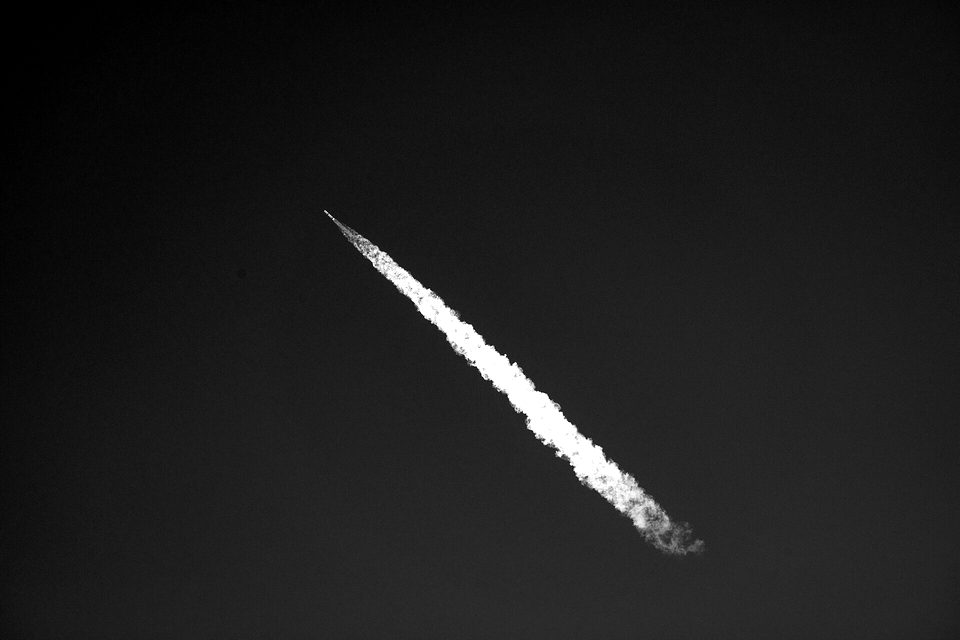

Blue Origin launched its New Glenn rocket from Cape Canaveral, Florida, on Thursday afternoon, sending two small NASA spacecraft toward Mars and landing the rocket’s reusable first stage on a ship at sea, according to CBS News and NBC News (via the Associated Press).
The launch had been delayed for days by bad weather and strong solar storms, according to both outlets. The mission was only the second flight of the rocket. On its first flight in January, the booster failed to reach its offshore landing vessel, CBS News reported.
This time the booster came back. Both outlets reported that the first stage touched down on a Blue Origin barge at sea. NBC News described the recovery as “a remarkable first” for the company and said the booster landed 375 miles offshore, with employees cheering.
Meanwhile the rocket released the two ESCAPADE spacecraft on their way toward Mars. NBC News described the mission as a relatively low-budget one.
The two craft will not head straight for Mars. NASA passed up the best launch window last fall because of concerns about delays with the new rocket, NBC News reported. Mission planners instead chose a flight plan that takes longer to arrive. Both outlets reported that the probes will loiter for about a year before heading to Mars, where they are due to arrive in 2027.
The science goal is to study how the solar wind interacts with Mars and strips away its atmosphere, both outlets reported. NBC News said that flying two spacecraft at the same time will provide an “unprecedented stereo viewpoint,” in the words of lead scientist Rob Lillis, and that the findings could also help show how to protect astronauts from Mars’s radiation environment.
The reported cost of the mission differs by outlet: CBS News put it at $107.4 million, while NBC News said it came in under $80 million.
For Blue Origin, the flight matters beyond Mars. NBC News said the company plans to launch a prototype Blue Moon lander in the coming months and that employees chanted “Next stop, moon!” after the landing.
Sources
- CBS News, Nov. 13, 2025: launch time, solar storm delay, booster recovery, ESCAPADE satellites, cost, trajectory <https://www.cbsnews.com/news/blue-origin-launches-twin-nasa-mars-probes-new-glenn-rocket/>
- NBC News (Associated Press), Nov. 13, 2025: launch, booster landing on barge, flight plan to Mars in 2027, science goals, moon plans <https://www.nbcnews.com/science/space/blue-origin-launches-huge-rocket-carrying-twin-nasa-spacecraft-mars-rcna243809>
This article was drafted with automated tools from the sources listed, checked by a review pass, and published by Daniel Varrone. Corrections: editor@monochromechronicles.com