Science · Climate
NOAA Report Finds Arctic Had Its Hottest Year on Record
The annual Arctic Report Card also found record-low winter sea ice and warns that budget cuts could weaken the measurements behind it.
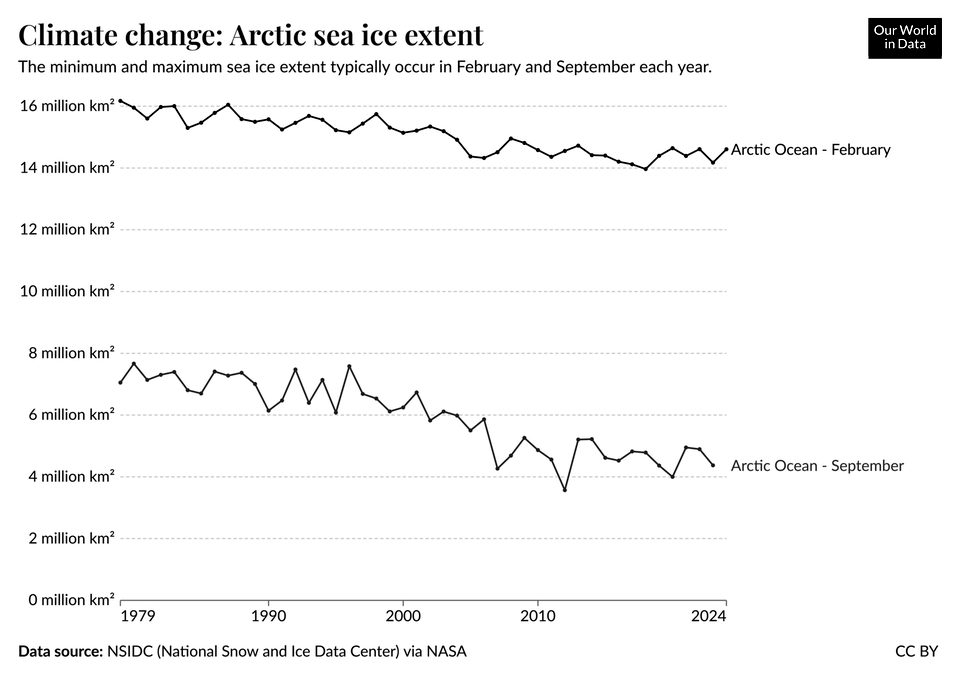

The Arctic had its hottest year since record-keeping began 125 years ago, the National Oceanic and Atmospheric Administration said in its annual Arctic Report Card, which CBS News and NBC News covered this week. The period reviewed ran from October 2024 through September 2025.
“The Arctic continues to warm faster than the global average with the 10 years that comprise the last decade marking the 10 warmest years on record,” said Steve Thur, NOAA’s acting chief scientist, according to NBC. The report says Arctic temperatures have risen at more than double the global rate since 2006, CBS reported, and describes “a clear pattern of Arctic warming.”
Details cited by the outlets include sea surface temperatures as much as 13 degrees Fahrenheit above the 1991-2020 average, the warmest since at least 1900; the lowest winter sea ice maximum in the 47 years of satellite records, reached in March; and a September minimum that was the 10th lowest, CBS reported. “All of the 19 lowest September minimum ice extents have occurred in the last 19 years,” the report said. Autumn 2024 was the warmest on record, and winter 2025 ranked second-warmest. Glaciers in Scandinavia lost the most ice on record between 2023 and 2024, and the Greenland ice sheet lost an estimated 129 billion tons of ice in 2025, CBS said.
On land, North American tundra was greener than ever recorded, NBC reported. Thur said melting permafrost is altering ecosystems and “turning over 200 watersheds in Arctic Alaska orange” as iron and other elements are released into rivers, with higher acidity and more toxic metals found in the rusting streams.
The report arrives amid a political backdrop. NBC noted it is the 20th Arctic Report Card and the first during President Donald Trump’s second term, and that the administration has taken steps to scuttle or downplay other climate reports, including the National Climate Assessment. Trump has called climate change a “con job,” and the administration is working to remove the Environmental Protection Agency’s ability to regulate greenhouse gases, NBC said. Report author Matthew Druckenmiller of the National Snow and Ice Data Center said the team “did not receive any political interference with our results.” Outside scientists told NBC the tone matched past years, though climate scientist Tom Di Liberto pointed out that last year’s headline called for reducing fossil fuel production while this year’s report did not mention fossil fuels.
The authors also warn about the data itself. The report says risks to funding and staffing and aging infrastructure “may compound existing” gaps in Arctic observing, “jeopardizing long-term trend analyses.” It highlights Defense Meteorological Satellite Program satellites scheduled to be decommissioned in 2026, which will limit sea ice measurements, and says a tundra greenness dataset will not be updated because of NASA funding cuts, NBC reported.
NOAA unveiled the findings at the American Geophysical Union’s annual meeting in New Orleans, NBC said. The Arctic is warming two to four times faster than the rest of the planet because of a feedback in which lost ice exposes darker surfaces that absorb more sunlight.
Sources
- NBC News, Dec. 16, 2025: findings, political context, budget warnings, scientists’ comments <https://www.nbcnews.com/science/climate-change/arctic-hot-record-low-sea-ice-noaa-report-card-rcna249372>
- CBS News, Dec. 17, 2025: temperature and ice figures, glacier loss <https://www.cbsnews.com/news/arctic-temperatures-climate-change-noaa-report/>
This article was drafted with automated tools from the sources listed, checked by a review pass, and published by Daniel Varrone. Corrections: editor@monochromechronicles.com