Business · Trade
U.S. and Taiwan Strike Trade Deal Cutting Tariffs to 15% for Chip Investment
Commerce says Taiwanese firms will invest at least $250 billion in the U.S., backed by another $250 billion in Taiwanese credit guarantees; Taiwan’s opposition-led legislature still has to approve it.
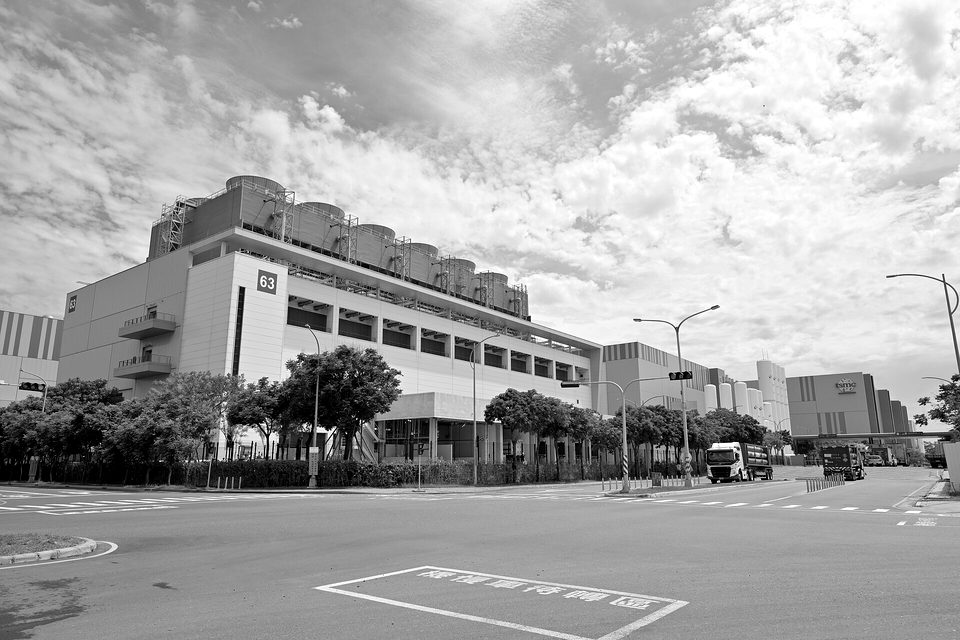

The United States and Taiwan have reached a trade agreement that lowers the tariff on most Taiwanese goods to 15 percent from 20 percent in exchange for a large wave of Taiwanese investment in American semiconductor manufacturing, the Commerce Department announced Thursday. The deal is meant to pull more of the world’s chip production, a field in which Taiwan is a powerhouse, onto U.S. soil.
Under the terms described by Commerce, Taiwanese semiconductor and technology companies will make new, direct investments of at least $250 billion in the U.S., according to AFP, and Taiwan’s government will provide at least $250 billion in credit guarantees to help other Taiwanese firms invest in the American supply chain. CBS News put the combined commitment at about half a trillion dollars. The department said the deal “will drive a massive reshoring of America’s semiconductor sector,” AFP reported. Commerce did not name the companies expected to invest, CBS News said.
The 15 percent rate replaces the 20 percent “reciprocal” tariff that President Trump set for most Taiwanese imports. AFP reported that tariffs on Taiwanese auto parts, timber, lumber and wood products would also be capped at 15 percent, and that generic pharmaceuticals and certain natural resources would face no reciprocal duties. CBS News added aircraft components to the list of items that would not be tariffed. Taiwan’s government says the new rate will not stack on top of existing duties, AFP reported.
Companies that build new chip plants in the U.S. would get favorable treatment on future semiconductor tariffs, AFP reported, and CBS News said they could avoid tariffs on some imports. Commerce Secretary Howard Lutnick told CNBC that the goal is to bring 40 percent of Taiwan’s chip supply chain and production to the U.S., AFP said. Taiwan’s economy minister, Kung Ming-hsin, projected that production of advanced AI chips would be split about 85-15 between Taiwan and the U.S. by 2030, and 80-20 by 2036. He said Taiwan would remain the world’s most important producer of AI semiconductors, according to AFP.
Supporters of the administration’s approach argue that tariffs are leverage that gets expensive factories built at home, and Lutnick’s stated 40 percent target reflects that view. The deal follows a pledge last year by Taiwan Semiconductor Manufacturing Co. to spend an additional $100 billion on U.S. plants. Lutnick said the company has bought hundreds of acres next to its Arizona property, AFP reported. TSMC said it welcomes strong trade agreements between the U.S. and Taiwan.
Reaction in Taiwan was divided. Premier Cho Jung-tai praised negotiators for “delivering a well-executed home run,” AFP reported. Cheng Li-wun, chair of the opposition Kuomintang, warned of a “hollowing out” of Taiwan’s economy. Taiwan’s opposition-controlled parliament must approve the agreement, AFP reported. China’s foreign ministry said it “resolutely opposes” the deal.
Some of the legal ground is unsettled. CBS News noted that the agreement was announced before the Supreme Court rules on whether the president can impose tariffs unilaterally under emergency powers. AFP also reported that the U.S. announced a 25 percent duty on certain semiconductors the day before, a step it said would let Nvidia sell AI chips to China.
Smaller manufacturers worry about costs that remain. Chris Wu of the Taiwanese firm Litz Hitech told AFP the company cannot absorb a tariff on behalf of its U.S. customers given its single-digit profit margins.
Sources
- AFP (via France 24), Jan. 15, 2026: tariff cut from 20% to 15%, $250 billion direct investment and $250 billion credit guarantees, Lutnick’s 40% goal, sector caps, Kung’s 85-15 projection, reactions from Cho, Cheng, China and TSMC, parliamentary approval, 25% chip duty <https://www.france24.com/en/live-news/20260115-us-says-reached-deal-with-taiwan-to-lower-tariffs-boost-investments>
- CBS News, Jan. 15, 2026: Commerce announcement, 15% cap versus 20% rate, $250 billion investment and credit guarantees totaling about half a trillion dollars, items exempt from tariffs, Supreme Court tariff case pending <https://www.cbsnews.com/amp/news/us-taiwan-deal-tariffs-boosting-financing-us-semiconductor>
This article was drafted with automated tools from the sources listed, checked by a review pass, and published by Daniel Varrone. Corrections: editor@monochromechronicles.com