United States · Supreme Court
Supreme Court Appears Skeptical of Hawaii Law Limiting Guns on Private Property
Conservative justices pressed Hawaii’s lawyer on a rule that bars licensed handgun carriers from open-to-the-public businesses unless the owner says yes; liberal justices stressed property owners’ rights.
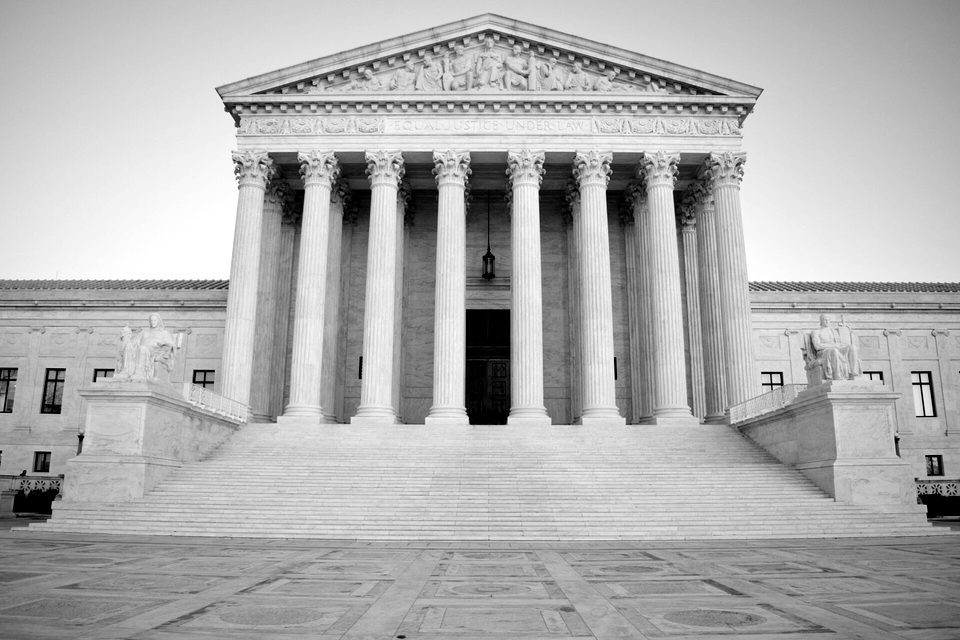

Several conservative justices on the Supreme Court appeared ready Tuesday to strike down a Hawaii law that bars people with concealed-carry licenses from bringing handguns onto private property that is open to the public unless the owner has expressly allowed it. The argument in Wolford v. Lopez gave the justices their latest chance to define how far states can go in restricting guns after the court’s 2022 Bruen decision, which required gun laws to fit the nation’s history and tradition of firearm regulation.
Hawaii enacted the law in the wake of Bruen. Carrying a gun in violation of it is a misdemeanor punishable by up to a year in prison, CBS News reported. California, Maryland, New Jersey and New York have similar laws, and licensed carriers in the other 45 states can generally carry on private property open to the public, CBS said. Three Maui residents and the Hawaii Firearms Coalition sued. A federal district court sided with them, CBS reported, but the 9th Circuit upheld the law, concluding, according to SCOTUSblog, that a national tradition likely exists of prohibiting armed entry onto private property without consent.
Alan Beck, representing the challengers, told the justices that Hawaii “has run roughshod” over the constitutional right to bear arms, SCOTUSblog reported. Sarah Harris of the Solicitor General’s office, arguing for the Trump administration in support of the challengers, said the law “offends our history and tradition” and warned that a licensed carrier who stops for gas could commit a crime, according to CBS News.
Chief Justice John Roberts cited earlier decisions describing the Second Amendment as a “disfavored right” and pressed Hawaii’s lawyer, Neal Katyal, on why private property should work differently for the Second Amendment than for the First, CBS reported. He noted that a candidate can knock on a voter’s door without express permission, while an armed person in Hawaii would need authorization first. Justice Samuel Alito told Katyal, “You’re just relegating the Second Amendment to second-class status.” Justice Brett Kavanaugh told Harris the case should be easy because Hawaii fails the history-and-tradition test, saying, “End of case,” according to CBS. SCOTUSblog reported that Justice Neil Gorsuch argued governments cannot redefine property rights to infringe other constitutional rights.
Katyal argued that the Constitution protects the right to bear arms but does not imply consent to bring a gun onto someone else’s property. “An invitation to shop is not an invitation to bring your Glock,” he said, SCOTUSblog reported. Gun-violence prevention groups, including the Brady Center and Giffords Law Center, urged the court to uphold the law, CBS said.
The court’s liberal justices pressed the property-rights framing. Justice Elena Kagan said Hawaii’s historical examples were persuasive because they flip a default rule on explicit consent, SCOTUSblog reported. Justice Ketanji Brown Jackson called the case mainly a question of how states treat owners’ consent and said the Second Amendment “yields to the property interests” of owners. SCOTUSblog described Justice Amy Coney Barrett as the only Republican appointee who seemed even partly sympathetic to Hawaii, noting she asked whether the challengers’ position would also bar a similar rule for private homes.
A contested piece of the history involves an 1865 Louisiana Black Code that restricted guns on property of formerly enslaved people. SCOTUSblog reported that Gorsuch and Alito were skeptical that it was a fair precedent, while Katyal said it remained relevant.
SCOTUSblog headlined its account that the court appeared sympathetic to the gun owners’ challenge, and a ruling is pending.
Sources
- CBS News, Jan. 20, 2026: oral argument, comments from Roberts, Alito, Kavanaugh, Harris, Beck and Katyal, penalty, states with similar laws, advocacy groups on both sides <https://www.cbsnews.com/news/supreme-court-hawaii-gun-law-wolford-v-lopez/>
- SCOTUSblog, Jan. 20, 2026: argument analysis including Gorsuch, Kagan, Jackson and Barrett, Black Code dispute, Katyal and Beck quotes <https://www.scotusblog.com/2026/01/supreme-court-appears-sympathetic-to-gun-owners-challenge-to-hawaii-law/>
- SCOTUSblog, Jan. 15, 2026: background on the Hawaii law, its 2023 challenge and the 9th Circuit ruling <https://www.scotusblog.com/2026/01/court-to-hear-oral-argument-on-law-banning-guns-on-private-property/>
This article was drafted with automated tools from the sources listed, checked by a review pass, and published by Daniel Varrone. Corrections: editor@monochromechronicles.com