Health · Update
CDC Models Show Ebola Outbreak Could Top 20,000 Cases Without Faster Isolation
Three new analyses from the federal agency say containment hinges on isolating patients within two days of symptoms; the risk to the general U.S. public remains low.
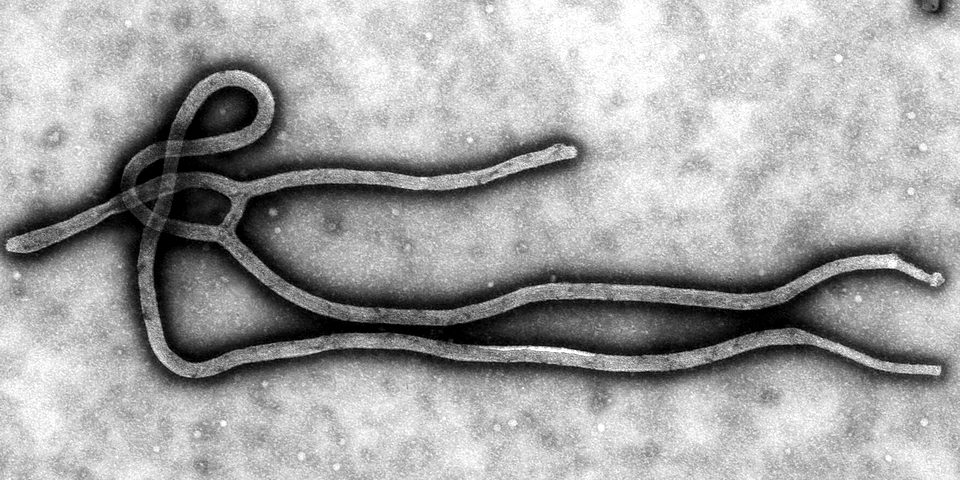

The Ebola outbreak in the Democratic Republic of Congo and Uganda could reach more than 20,000 cases within three months if too few patients are isolated quickly, according to modeling released Friday by the U.S. Centers for Disease Control and Prevention. It would become one of the largest Ebola outbreaks on record. The agency says the risk to the general U.S. population remains low.
The projections come from three analyses the CDC published, including a modeling paper in its Morbidity and Mortality Weekly Report released early. The authors are from the CDC and affiliated institutions. The model uses a branching-process method calibrated to early death counts and runs scenarios to Aug. 22. The report puts the outbreak, caused by the Bundibugyo virus and declared May 15, at 378 confirmed cases as of June 2, including 363 in Congo and 15 in Uganda, with 63 confirmed deaths, and calls it already the largest known outbreak of that virus.
The central variable is how many cases enter isolation soon after symptoms begin. If only 20 percent do so within two days, the CDC’s Jason Asher said at a briefing, “more than 20,000 cases are projected” in the next three months, NPR reported. The MMWR modeling found that in the base-case calibration, 65 percent of simulations at 20 percent isolation reached at least 20,000 cases and 85 percent reached at least 10,000. At 70 percent isolation, 94 percent of simulations stayed under 10,000 cases, the CDC found, and Asher put the chance of limiting the outbreak below that figure at 94 percent.
For scale, the 2014-2016 West Africa epidemic produced about 28,000 cases, and the CDC authors say that under low-isolation scenarios the current outbreak could become the second-largest on record within three months. The report estimates a basic reproduction number of about 2.5 and says its analysis did not provide evidence that the reproduction number is unusually large. The agency cautions that the true scope of the outbreak is likely larger than available data show and “might prove challenging to contain and control,” in an area marked by armed conflict, displacement and poor access to health care.
Independent experts agreed with the direction of the findings but not entirely with the gloom. Jennifer Nuzzo, director of the Pandemic Center at Brown University School of Public Health, said the analysis “affirms what we have worried about since the beginning: This outbreak is following a dangerous trajectory and will get a lot worse unless we do more to stop it at its source.” Justin Lessler, an epidemiologist at the University of North Carolina, told NPR that things do not have to be so pessimistic and that local efforts could make a difference, though outbreaks of the projected size “are completely possible.”
The results depend on assumptions about the early outbreak. The main calibration assumes about 50 deaths by May 24; if the true figure was 200, the report found, even at 70 percent isolation 42 percent of simulations projected at least 10,000 cases.
On the U.S. risk, Satish Pillai, the CDC’s Ebola response incident manager, said the domestic risk “remains low,” though the agency’s paper notes that could change if the virus reaches large international transit hubs. NPR reported that Pillai said there is no reason for people in the U.S. to change their behavior or worry about international travel other than to Congo or Uganda. The World Health Organization declared the outbreak an international health emergency in May. PBS NewsHour reported Wednesday that health workers in Congo were struggling with overwhelmed facilities, armed groups and difficult contact tracing.
Sources
- CDC, Morbidity and Mortality Weekly Report early release, June 5, 2026: modeled scenario projections for the Bundibugyo outbreak, case and death counts as of June 2, isolation scenarios, reproduction number, domestic risk <https://www.cdc.gov/mmwr/volumes/75/wr/mm7522e1.htm>
- NPR, June 5, 2026: Asher and Pillai at the CDC briefing, 20,000-case projection, Nuzzo and Lessler comments, West Africa comparison <https://www.npr.org/2026/06/05/nx-s1-5848082/ebola-virus-cdc-outbreak-democratic-republic-congo-uganda>
- PBS NewsHour, June 3, 2026: overwhelmed facilities, armed groups and contact tracing in Congo <https://www.pbs.org/newshour/show/health-workers-struggle-to-contain-ebola-outbreak>
This article was drafted with automated tools from the sources listed, checked by a review pass, and published by Daniel Varrone. Corrections: editor@monochromechronicles.com