Science · Space
NASA Plans a $30 Million Robotic Rescue of the Swift Telescope
A startup’s three-armed spacecraft will try to lift the falling gamma-ray observatory to a higher orbit. NASA says there is no guarantee the first-of-its-kind effort will work.
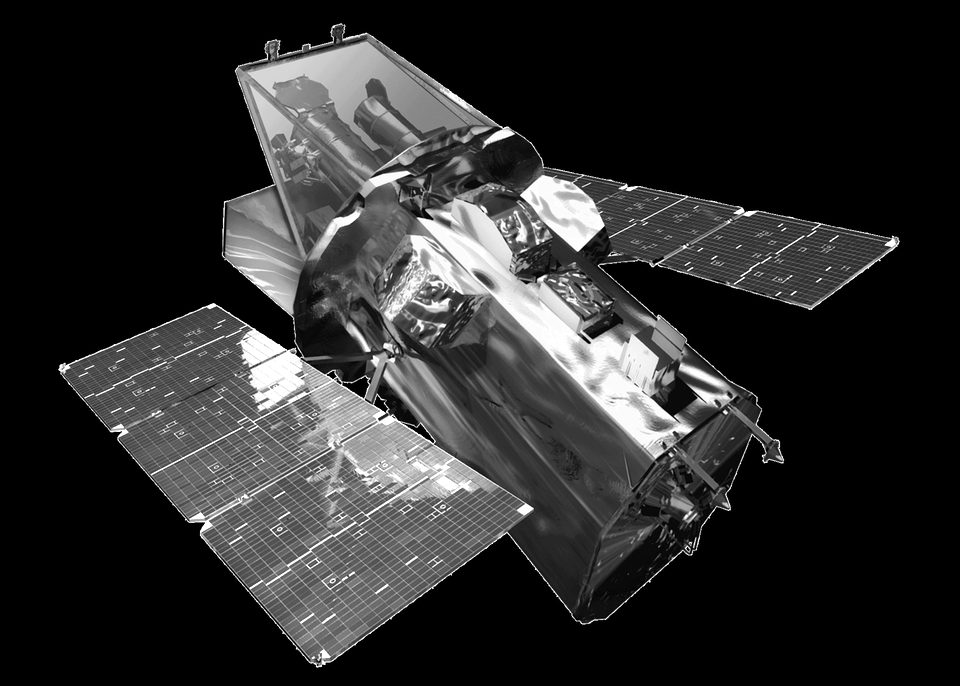

NASA is preparing an unusual salvage mission to keep its Swift Observatory from falling back to Earth. The agency hired the startup Katalyst Space Technologies for $30 million to boost the aging gamma-ray telescope into a higher orbit, the Associated Press reported in a story carried by CBS News. A robotic spacecraft built by Katalyst is scheduled to launch from the Marshall Islands aboard an air-launched Pegasus rocket as early as this week, according to CBS. NBC News reported that Northrop Grumman provides the aircraft and rocket.
Swift, launched in 2004, studies gamma-ray bursts, the most powerful explosions in the universe, which are caused by events such as the births of black holes and collisions of ultra-dense stars. It has been sinking faster because of the intense solar activity of the sun’s 11-year cycle, which heats Earth’s upper atmosphere and increases drag on satellites, NBC explained. NASA’s models show Swift’s orbit dropping below 185 miles, which is the point past which a rescue would not work, in October, according to both reports. NASA turned off the telescope’s science instruments in February to slow its descent, CBS reported.
The rescue spacecraft is about the size of a small refrigerator, CBS reported, with three arms that each reach a little over 3 feet and end in pincer-like grippers. It will take about a month to rendezvous with and capture Swift and a couple more months to raise its orbit from about 224 miles to about 373 miles. If all goes well, Swift could be back in operation by September, Katalyst CEO Ghonhee Lee told the AP. Swift was never designed to be serviced or retrieved, so the effort is risky, and company officials stress there is no guarantee it will work, CBS reported.
NASA officials say the telescope is worth saving. “If we let Swift reenter, we would lose that telescope. We would lose a lot of capability,” NASA science chief Nicky Fox said, adding that the agency lacks the budget to build a replacement. Shawn Domagal-Goldman, NASA’s astrophysics director, said, “No one thought it was going to be possible.” He described Swift as “NASA’s first responder” because it can pivot quickly to catch late-breaking events, CBS reported.
The mission is also a test of a commercial service. Only China has tried something similar, boosting a satellite into a higher graveyard orbit four years ago, CBS reported. John Nousek, an astronomy professor at Penn State University, told NBC that if the mission succeeds, “it will restore a $300 million (in 2004 dollars) satellite to full capability for only $30 million (in 2026 dollars),” and offer NASA and other customers a way to extend existing spacecraft at a fraction of the cost of new ones.
Hubble, which is also losing altitude, could be next. Lee said a larger robot now in development could boost the 36-year-old telescope as early as 2028, CBS reported, though NASA has made no decision. Katalyst sees Swift as the first step toward a satellite-repair business that could refuel and reposition spacecraft.
Sources
- CBS News (Associated Press), June 28, 2026: $30 million contract, rescue plan and timeline, Fox and Domagal-Goldman quotes, Hubble, China precedent <https://www.cbsnews.com/news/nasa-swift-observatory-katalyst-space-rescue/>
- NBC News (later source), June 29, 2026: solar activity and drag, Northrop Grumman role, 185-mile threshold, Nousek comment <https://www.nbcnews.com/science/space/nasa-swift-boost-mission-save-sinking-space-telescope-rcna351996>
This article was drafted with automated tools from the sources listed, checked by a review pass, and published by Daniel Varrone. Corrections: editor@monochromechronicles.com