United States · Update
U.S. Strikes Iran and Revokes Oil Waiver After Three Tankers Hit in Hormuz
Washington said the strikes were meant to punish Tehran after attacks on commercial ships, weeks after the interim accord that was supposed to reopen the strait.
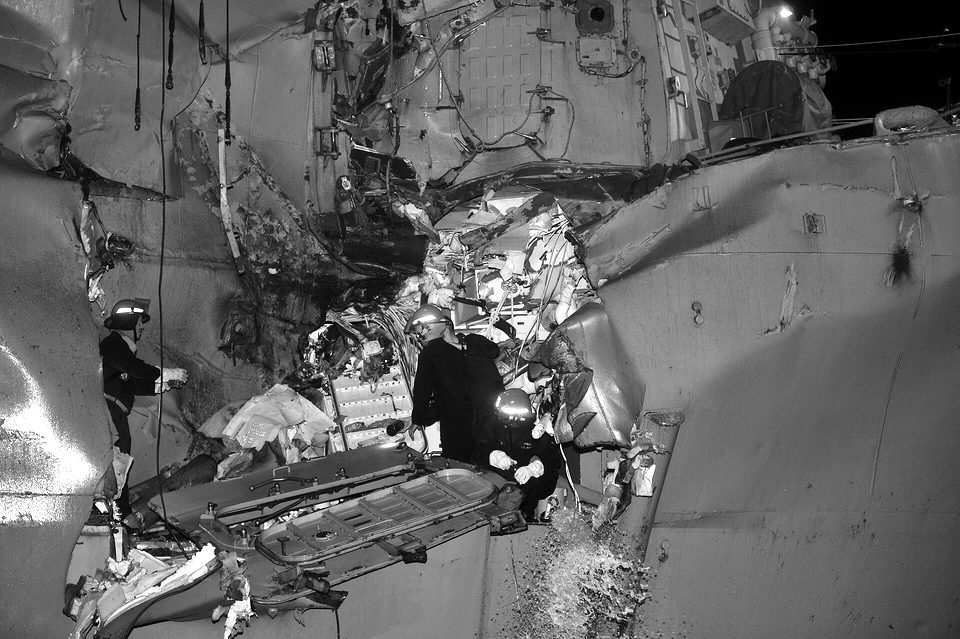

The U.S. military launched new strikes on Iran on Tuesday and the Trump administration revoked a sanctions waiver that had let Iran sell its oil, after three commercial ships were attacked in the Strait of Hormuz, according to PBS News. The escalation comes under the interim accord reached in June.
A U.S. official told PBS that the strikes were meant to punish the regime and that Iran had “clearly demonstrated they’re not listening.” The waiver, issued under the interim deal, had allowed Iranian oil to be sold openly in U.S. dollars, Asharq Al-Awsat later reported.
Three ships were hit. Maritime security expert Ian Ralby told PBS that two were confirmed, a Qatari liquefied natural gas tanker that caught fire and could still explode and a Saudi ultra-large crude carrier. Ralby said the attacks appeared to be Revolutionary Guard action. Iran has not claimed full responsibility, and it said warnings had been given to the Qatari vessel and were not heeded, PBS reported.
The attacks hit a waterway where traffic had only begun to recover. Ralby said that before the war, 130 to 160 vessels crossed the strait each day. After the April 8 ceasefire, traffic stayed near zero, with at most about 10 ships a day; after the memorandum of understanding, it rose to roughly 30 to 40 a day. Over the weekend, about 78 vessels transited in both directions over two days. Ralby described three routes: one permitted by Iran, one facilitated by the U.S. Navy and one backed by the International Maritime Organization and Oman. Ralby said all three were likely closed for now, and ships may shift to the Red Sea.
Asharq Al-Awsat reported that the interim deal let ships pass fee-free for 60 days, but that Tehran insists on controlling routes and plans to charge fees, and that the attacked vessels were on a route near Oman’s coast, not one set by Tehran. Analysts cited by Al Jazeera call the dispute over Article 5 of the memorandum, which concerns control of the strait, the biggest sticking point.
The memorandum sets a 60-day negotiating window, and the sides disagree over who is violating it. Iran has cited U.S. strikes, while Washington says Iran is not letting ships pass the strait safely, Al Jazeera reported.
Tehran has said it will control the strait on its own terms. The revoked waiver shows the leverage Washington kept: relief written into the interim accord can be withdrawn. The next days will show whether the attacks, and the American response, end the technical talks.
Sources
- PBS News, July 7, 2026: new strikes, waiver revoked, three vessels hit, Ralby on the attacks and shipping traffic, Iran’s statement on warnings <https://www.pbs.org/newshour/show/u-s-launches-new-strikes-on-iran-after-attacks-on-tankers-in-strait-of-hormuz>
- Al Jazeera, July 9, 2026 (later source): Article 5 dispute, positions of the sides on the memorandum <https://www.aljazeera.com/news/2026/7/9/us-strikes-iran-for-second-night-is-the-peace-process-all-over-now>
- Asharq Al-Awsat, July 8, 2026 (later source): waiver for dollar oil sales, fee-free passage dispute, route near Oman’s coast <https://english.aawsat.com/world/5293567-trump-says-ceasefire-iran-over-negotiations-can-continue>
This article was drafted with automated tools from the sources listed, checked by a review pass, and published by Daniel Varrone. Corrections: editor@monochromechronicles.com