Business · Sanctions
Treasury Sanctions More Than 60 Iran Targets in ‘Economic Outcast’ Push
Bessent announced “Operation Economic Outcast” and warned Iran’s trading partners of secondary sanctions as the rial fell to a record low.

The Treasury Department announced new Iran sanctions on Monday as part of a campaign the White House calls “Operation Economic Outcast,” Time reported. Treasury Secretary Scott Bessent, who had warned of an “economic D-Day,” announced sanctions on more than 60 targets, Time said, and the United States expanded the sectors of Iran’s economy that can be sanctioned to digital assets, technology, gold, aviation and shipping.
The Treasury’s Office of Foreign Assets Control published the details. It added numerous Iran-related individuals, entities and vessels to its sanctions list under several programs, and issued a determination covering the aviation, digital asset, gold, shipping and technology sectors, according to the agency’s list of recent actions. It also suspended two general licenses covering sports exchanges and academic and educational exchanges, issued a license authorizing certain activity involving a refining company, and issued another allowing the wind-down of certain transactions.
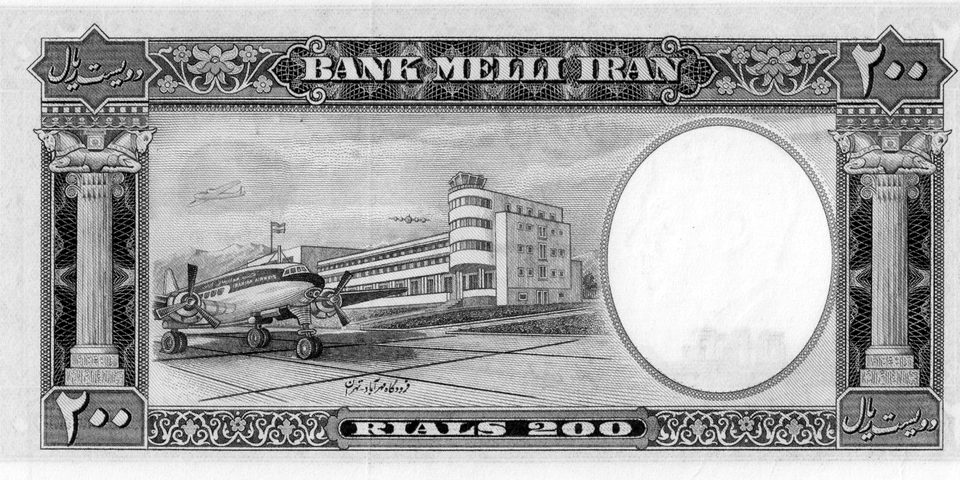
Time reported that Bessent said the government may impose secondary sanctions on Iran’s trade partners, which could roll out within weeks. He singled out Bank Melli, a state-owned bank with branches in about a dozen countries, saying each branch must close or lose access to U.S. dollars. Time said Treasury has previously claimed the bank serves entities tied to Iran’s nuclear and ballistic missile programs. President Trump said Aug. 19 that the United States would mount “the most crushing economic operation ever mounted,” Time reported.
The rial reached a record low of about 2.02 million to the dollar on the open market Monday, with Time noting it was already the world’s least valuable currency. The International Monetary Fund projects Iran’s average inflation this year at 68.9 percent. Brent crude closed near $92 a barrel Monday, below its wartime high of about $120.
Iran’s foreign minister, Abbas Araghchi, called the United States “desperate”, and Mohsen Rezaei warned that countries joining the restrictions would be treated as enemies, according to Time. The U.S. has been at war with Iran since Feb. 28. A June memorandum of understanding expired on Aug. 17 and peace talks have stalled. Time reported that Iran is meeting Oman about regulating passage through the Strait of Hormuz and that a Pakistani delegation led by Field Marshal Asim Munir went to Tehran.
Analysts doubt that pressure alone will change Tehran’s course. Trita Parsi of the Quincy Institute told Time that decades of sanctions have not changed Iran’s policy, that Iran is more likely to escalate than capitulate and that the United States has not defined clear demands. Ryan Costello of the National Iranian American Council warned that sanctions harm ordinary Iranians and that disruptions to energy flows or retaliation by China could damage the global economy.
The White House says the campaign is meant to pressure Iran into concessions through isolation and financial restrictions, Time reported. The Hill reported on Aug. 27, in a later account, that Bessent had warned countries Monday to cut all financial ties with Iran or risk losing access to the dollar system.
Sources
- Time, Aug. 24, 2026: Operation Economic Outcast, more than 60 targets, sector expansion, Bank Melli, secondary sanctions, rial record low, Iran’s response, Brent, expert views <https://time.com/article/2026/08/24/iranian-rial-hits-record-low-new-us-sanctions/>
- U.S. Treasury Office of Foreign Assets Control, Aug. 24, 2026: Iran-related designations, sector determination under Executive Order 13902, suspended general licenses F and G, new licenses AA and BB <https://ofac.treasury.gov/recent-actions/20260824>
- The Hill, Aug. 27, 2026 (later source): Bessent’s Monday warning to cut financial ties <https://thehill.com/policy/defense/6056395-centcom-us-clears-iranian-sea-mines/amp/>
This article was drafted with automated tools from the sources listed, checked by a review pass, and published by Daniel Varrone. Corrections: editor@monochromechronicles.com