World · Iran War
Trump Rejects Iran’s Seven-Day Plan to Reopen the Strait of Hormuz
The president said the proposal “would not be acceptable”; Tehran’s foreign minister said Iran “will not back down” and is waiting to hear from mediators.
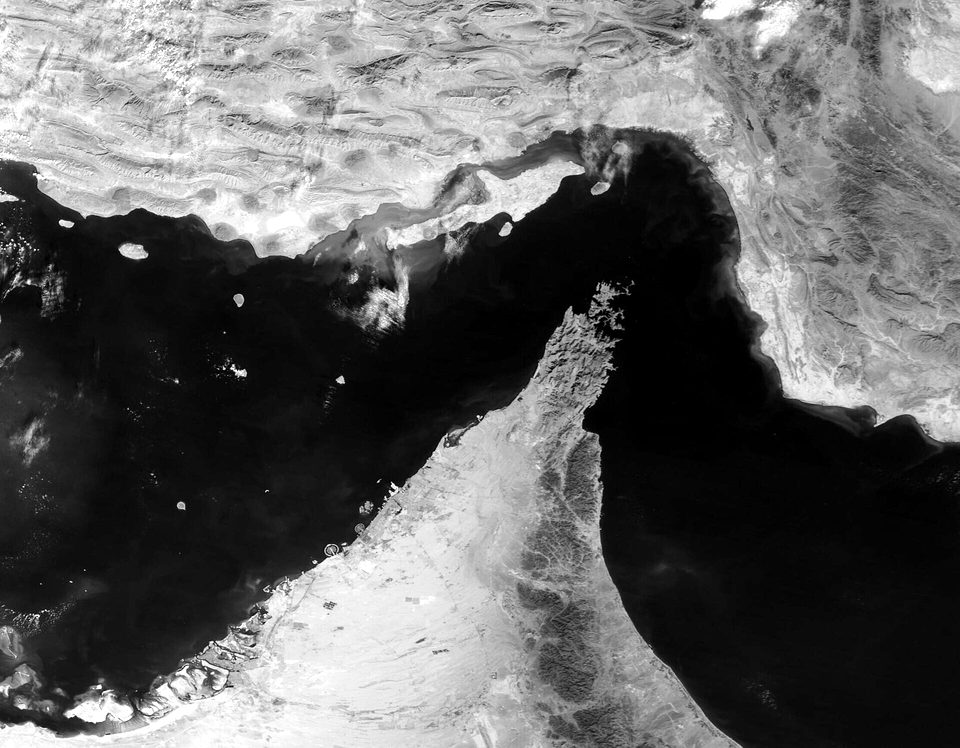

President Trump on Saturday rejected a seven-day plan from Iran to reopen the Strait of Hormuz, saying Tehran wants a deal only “because they are losing so badly” and that the proposal “would not be acceptable,” according to Al Jazeera. “I’d like to make a deal, too,” he said, but offered no alternative, Al Jazeera reported.
Iran announced the plan on Friday at the U.N. General Assembly. It calls for the United States to release frozen Iranian funds, lift oil sanctions and end its naval blockade of Iranian ports, Al Jazeera reported. Foreign Minister Abbas Araghchi said those steps could be completed in four or five days, after which the strait would reopen and talks on a final agreement would begin by the seventh day. “If certain conditions are met, the Strait of Hormuz would be open on the end of the seventh day,” he said, according to the outlet, which noted that he gave few details and that his timetable could begin the day after Washington accepts.
The plan reopens the strait first and restarts peace talks second. Mr. Araghchi said it resembles the June 17 memorandum of understanding between Iran and the United States, which broke down, Al Jazeera reported. The sticking point is sequencing: the United States wants the nuclear issue discussed immediately and as part of a single package, while Iran’s approach puts the strait first, according to the outlet. Iran has said it will not engage in wider talks, including on its nuclear program, until the blockade is lifted, sanctions are repealed and the United States guarantees an end to strikes.
Mr. Araghchi said Iran “will not back down” on its conditions, and that “nothing has been conveyed to us from the mediators yet,” accusing Mr. Trump of contradictory statements, Al Jazeera reported. President Masoud Pezeshkian said Tehran no longer trusts negotiations with Washington: “We have no trust in the American side,” he said, adding that the United States had “closed the routes before us,” and that the strait would reopen if talks succeed.
Analysts told Al Jazeera the plan was mostly a gesture. Ross Harrison of the Middle East Institute said it was aimed at Iranian and American audiences and that Tehran likely expected rejection, because the plan closely mirrored the June agreement, which Iran believes Washington undermined. Urban Coningham of the Royal United Services Institute doubted Iran will get sanctions relief, calling Hormuz a “clear Iranian red line.”
The Wall Street Journal, citing unnamed U.S. officials, reported that Mr. Trump was privately skeptical that Tehran would meet his demands and expects a renewed bombing campaign after the Nov. 3 midterm elections, according to Al Jazeera.
The stakes for American consumers are direct. The war, which the United States and Israel began on Feb. 28, led Iran to close the strait, and attacks on vessels have sharply curtailed shipping, Al Jazeera reported. The United States has imposed an economic blockade and threatened secondary sanctions, and the United Arab Emirates, Iraq and Oman have cancelled flights in response, the outlet said.
Sources
- Al Jazeera, Sept. 26, 2026: Trump’s rejection, Iran’s plan, Araghchi and Pezeshkian statements, analysts, Wall Street Journal report, background <https://www.aljazeera.com/news/2026/9/26/trump-rejects-irans-seven-day-roadmap-to-reopen-strait-of-hormuz>
- Al Jazeera, Sept. 25, 2026: structure of the seven-day plan, link to the June 17 memorandum, sequencing dispute, Iran’s broader conditions <https://www.aljazeera.com/news/2026/9/25/whats-in-irans-seven-day-plan-to-reopen-the-strait-of-hormuz>
This article was drafted with automated tools from the sources listed, checked by a review pass, and published by Daniel Varrone. Corrections: editor@monochromechronicles.com