Health · Nobel Prizes
Medicine Nobel Goes to Three Scientists Who Switched Brain Cells On With Light
Karl Deisseroth, Peter Hegemann and Georg Nagel are honored for discovering light-sensitive proteins in algae and turning them into optogenetics, now a standard tool of brain research.
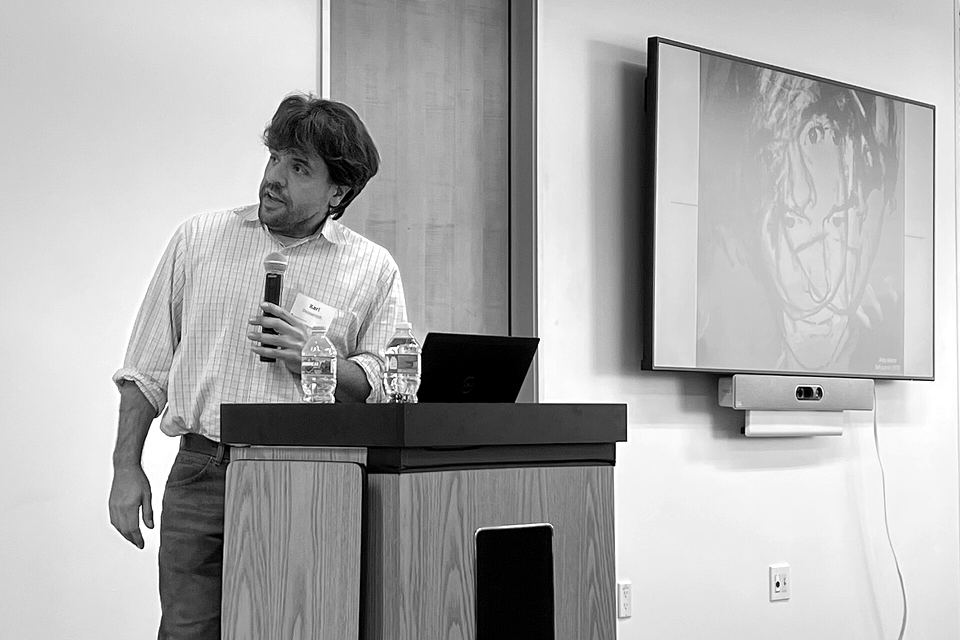

The 2026 Nobel Prize in Physiology or Medicine was awarded Monday to Karl Deisseroth, Peter Hegemann and Georg Nagel for discoveries that let scientists turn individual nerve cells on and off with flashes of light, a technique known as optogenetics that has reshaped the study of the brain.
The Nobel Assembly at the Karolinska Institute in Stockholm cited the three “for their discoveries concerning light-gated ion channels and optogenetics.” Deisseroth works at Stanford University and the Howard Hughes Medical Institute, Hegemann at Humboldt University in Berlin, and Nagel at the University of Würzburg in Germany. They will share the prize of 12 million Swedish kronor, about $1.2 million.
The work began with a simple question about pond life. Hegemann wanted to know how Chlamydomonas, a single-celled green alga, manages to swim toward light. With Nagel, he identified channelrhodopsin, a protein on the alga’s surface that opens a channel in the cell membrane when struck by light, letting charged particles flow through. The pair showed that the protein worked in other cells too, in research published in the early 2000s.
Deisseroth turned that discovery into a tool. He inserted the gene for channelrhodopsin into rat nerve cells and found that shining blue light on them made them fire, in a landmark 2005 paper, and two years later his team had made the same light switch work in the brains of living mice. Because researchers can deliver the gene to specific types of neurons, they can activate or silence chosen circuits and watch what happens to behavior.
That precision transformed neuroscience. Laboratories around the world now use the method to map which cells control which functions and how those cells connect, work that has been central to studying memory. The Nobel committee said the technique is being used in laboratories everywhere to reveal the brain’s mysteries. It is also being explored as a treatment, including in attempts to restore sight to people with visual impairment, and as a way to understand neurological and psychiatric illness.
The award also stirred a familiar debate about credit, since the Nobel can be shared by no more than three people. Some scientists noted on social media that Ed Boyden, the first author of Deisseroth’s 2005 paper and now a prominent researcher in his own right, was not among the winners, STAT reported. The committee’s background material credits earlier work by other researchers, including Gero Miesenböck, who first made ordinary neurons sensitive to light in 2002.
Last year’s medicine prize went to three researchers for their work on the immune system.
The physics prize will be announced Tuesday, followed by chemistry, literature and peace later in the week, and economics on Oct. 12.
Sources
- Associated Press via Georgia Public Broadcasting, Oct. 5, 2026: laureates and affiliations, prize amount, announcement at the Karolinska Institute, Nobel committee statement, Perlmann reaching winners, schedule of remaining prizes
- STAT, Oct. 5, 2026: citation, Howard Hughes Medical Institute affiliation, Chlamydomonas and channelrhodopsin, Deisseroth’s 2005 paper, Ed Boyden credit debate, Miesenböck’s 2002 work
- Ophthalmology Times and Retinal Physician, Oct. 2026: Nobel press release noting use of the method in attempts to restore sight; Deisseroth’s rat neuron and living mouse experiments
- The Guardian, Oct. 5, 2026: 2026 medicine prize awarded for optogenetics
- Nobel Assembly at Karolinska Institutet, press release, Oct. 5, 2026: Deisseroth at the Howard Hughes Medical Institute and Stanford; 2005 rat-neuron breakthrough and living mice two years later
- Nobel Assembly at Karolinska Institutet, scientific background, Oct. 5, 2026: Miesenböck’s 2002 genetic light sensitization of neurons; Boyden et al., 2005
- Il Sole 24 Ore, Oct. 2026: economics prize announced Monday, Oct. 12
This article was drafted with automated tools from the sources listed, checked by a review pass, and published by Daniel Varrone. Corrections: editor@monochromechronicles.com