Science · Nobel Prizes
Chemistry Nobel Goes to Kagan and Soai for Work on Life’s One-Handed Molecules
The French and Japanese chemists showed how reactions can amplify a small tilt toward one mirror-image form of a molecule, a puzzle at the heart of both drug design and the origins of life.
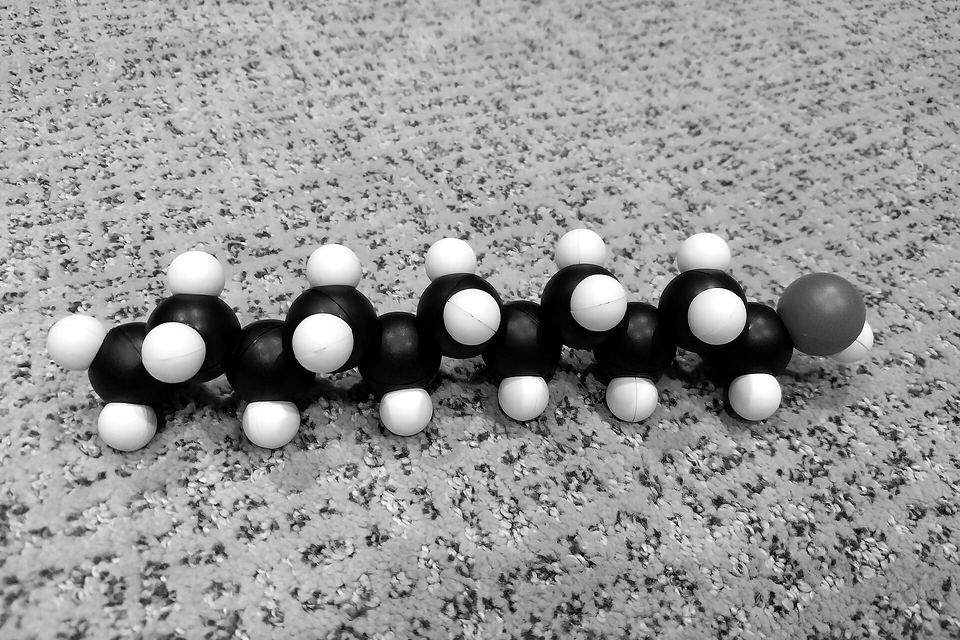

Henri B. Kagan of France and Kenso Soai of Japan won the 2026 Nobel Prize in Chemistry on Wednesday for discoveries that explain how chemical reactions can turn a slight preference for one mirror-image form of a molecule into an overwhelming one.
The Royal Swedish Academy of Sciences cited the pair “for the discovery of non-linear effects and autocatalysis in asymmetric organic synthesis.” They will split the prize of 12 million Swedish kronor, or about $1.2 million. Kagan, 95, is affiliated with Paris-Sud University in Orsay, and Soai, 76, with the Tokyo University of Science.
Many molecules come in two versions that contain the same atoms but are arranged as mirror images, the way a left hand mirrors a right. The difference can matter a great deal. One form of the compound carvone smells of mint and the other of caraway, the Associated Press noted. In medicine, the two forms of a drug can act very differently in the body, which is why pharmaceutical chemists work hard to make only the version they want.
Life itself is lopsided in this way. Proteins are built almost entirely from left-handed amino acids, while the sugars in DNA and RNA have the opposite handedness. Ordinary laboratory reactions, by contrast, tend to produce equal amounts of both forms, which left scientists asking how living chemistry came to favor one side.
Kagan’s contribution, which the Guardian dates to 1986, was to show that a catalyst with only a modest imbalance between its left- and right-handed forms could yield products with a much larger imbalance. Soai went further, designing a reaction in which the product molecules catalyze the production of more of themselves. In that process, known as autocatalysis, a small initial excess of one form snowballs. According to the Guardian, by 2003 he had shown a reaction that made almost exclusively one mirror image, something the newspaper said the Nobel committee considered never before achieved by anything other than life itself.
Peter Somfai, a Lund University chemist on the Nobel committee, called Soai’s reaction probably the coolest experiment in organic chemistry. He said it was hard to credit any single medicine to the work but that it underlies drug development broadly as a tool for designing catalysts. Rigoberto Hernandez, president of the American Chemical Society, told the AP that today’s medicines would not be possible without this chemistry.
Soai, reached by phone, called it one of the most exciting days of his life. French President Emmanuel Macron said the award was a source of immense pride for France.
Chemistry World noted that the self-amplifying reactions offer one plausible route for how early Earth chemistry tipped toward a single handedness, though they do not settle the question of how life actually began.
The chemistry award follows this week’s prizes in medicine, for light-based tools used to study the brain, and in physics, for work on rare neutrinos.
Sources
- Associated Press (via NPR/WUNC), Oct. 7, 2026: laureates’ ages, nationalities and affiliations, carvone example, drug design relevance, Somfai and Hernandez remarks, Soai reaction, Macron statement, other 2026 prizes
- Reuters (via Khaleej Times), Oct. 7, 2026: announcement by the Royal Swedish Academy of Sciences, citation, 12 million crowns prize
- The Guardian, Oct. 7, 2026: Kagan’s 1986 discovery, Soai’s autocatalytic reaction and 2003 result, protein and DNA handedness, Somfai quotes, Soai’s reaction by telephone
- Chemistry World, Oct. 7, 2026: affiliations, self-catalysing reactions producing an excess of one enantiomer, possible explanation for life’s handedness
- Associated Press (via KSAT), Oct. 7, 2026: carvone mint and caraway example, Somfai’s ‘coolest experiment’ remark, Hernandez on medicines, Macron’s statement of immense pride
This article was drafted with automated tools from the sources listed, checked by a review pass, and published by Daniel Varrone. Corrections: editor@monochromechronicles.com