Science · Remembrance
Margaret Hamilton, Whose Software Guided Apollo to the Moon, Dies at 90
She led the MIT team that wrote the Apollo flight software, helped turn programming into an engineering discipline, and built in the safeguards that kept Apollo 11’s landing on track.

Margaret Hamilton, the computer scientist who led the team that wrote the onboard flight software for NASA’s Apollo missions and helped establish software engineering as a discipline, has died at 90. The Massachusetts Institute of Technology announced her death this week; she died on September 30 at a hospital in Cambridge, Massachusetts, her daughter, Lauren Hamilton, told the Associated Press.
Hamilton was born in Paoli, Indiana, in 1936, studied at the University of Michigan and earned a mathematics degree from Earlham College. She joined MIT in 1959, while her husband studied law at Harvard, learning to program under a well-known MIT meteorologist and later, the Guardian reported, writing software to detect enemy aircraft. When MIT’s Instrumentation Laboratory won a NASA contract in 1961 to build Apollo’s guidance software, she jumped at the chance, CNN reported. She went on to run the lab’s software engineering division, leading what CNN described as a team of about 100 engineers who wrote the code for both the command modules and the lunar landers.
At a time when programming was barely recognized as a profession, Hamilton pushed to treat it with the rigor of other engineering fields and popularized the term “software engineering.” Olivier de Weck, interim head of MIT’s aeronautics and astronautics department, said calling her a pioneer ahead of her time would be a dramatic understatement.
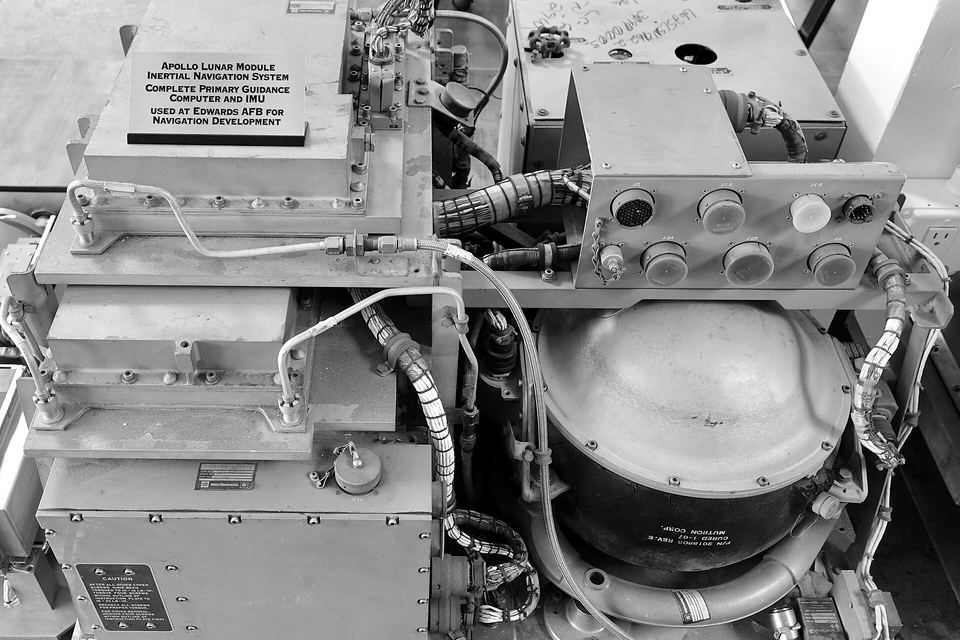
Her focus on anticipating failure proved its worth during Apollo 11 in July 1969. Minutes before the lunar module touched down, alarms warned that the onboard computer was overloaded. Rather than crash, the software shed lower-priority tasks and kept running the ones that mattered for landing, and the mission continued. Hamilton later said the error detection and recovery features had come to the rescue. NASA has credited the software’s response with allowing the landing to proceed safely.
One of her safeguards had a homely origin. Hamilton’s young daughter once crashed a command module simulator while playing astronaut, CNN recounted, revealing a way an astronaut could trigger the same fault. Hamilton added protections against it, an episode CNN said became known as the Lauren error.
After Apollo, she left to found her own software company. NASA gave her its Exceptional Space Act Award in 2003, according to CNN, and President Barack Obama awarded her the Presidential Medal of Freedom in 2016, remarking that the astronauts did not have much time but thankfully they had Margaret Hamilton. NASA Administrator Jared Isaacman said this week that her work helped make humanity’s first journeys to the moon possible.
Hamilton later became widely recognized through a photograph of her standing beside a stack of printed Apollo code as tall as she was. Looking back on the program, she told MIT News in 2009 that her team had no choice but to be pioneers and no time to be beginners.
She is survived by her daughter, a son-in-law, two grandsons and four great-grandchildren, according to MIT’s announcement as reported by the Guardian.
Sources
- CNN, Oct. 8, 2026: death at 90 confirmed by MIT, Sept. 30 date, MIT career from 1959, 1961 NASA contract, team of 100, popularizing software engineering, de Weck statement, birth in Paoli and education, ‘Lauren error’, Apollo 11 override per NASA, own company, 2003 NASA award, 2016 Medal of Freedom
- The Guardian, Oct. 8, 2026: MIT announcement, learning to program under an MIT meteorologist, aircraft-detection software, Apollo 11 alarms and recovery, Obama quote, survivors, 2009 MIT News quote
- Associated Press (via NBC News), Oct. 9, 2026: died Sept. 30 at a Cambridge hospital per her daughter, Isaacman statement, de Weck quote, photo beside the stack of Apollo code
This article was drafted with automated tools from the sources listed, checked by a review pass, and published by Daniel Varrone. Corrections: editor@monochromechronicles.com