Technology · Telecom
SpaceX Buys Airwaves to Make Starlink a Mobile Carrier, Rattling Wireless Stocks
The spectrum deal, which still needs federal approval, would let Starlink pair satellites with ground networks. Verizon, AT&T and T-Mobile lost tens of billions in market value, though analysts doubt a quick threat.
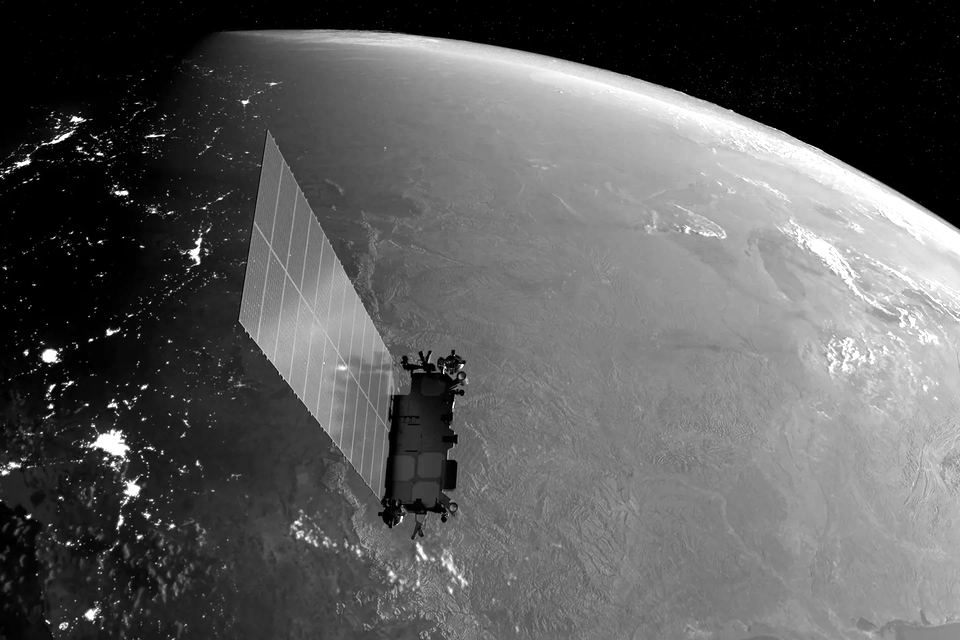

Elon Musk’s SpaceX has agreed to buy licenses for radio spectrum that it says will allow its Starlink Mobile business to become a major mobile carrier in the United States, an announcement that sent shares of the country’s largest wireless companies sharply lower on Friday.
SpaceX is buying the low-frequency airwaves from the investment firm Grain Management, according to a filing with the Federal Communications Commission cited by CBS News. Signals at those frequencies travel through walls and roofs better than the satellite signals Starlink uses now, addressing one of the main weaknesses of phone service from space. Musk called the purchase the last critical piece of the spectrum puzzle for complete phone coverage in America.
The deal still requires FCC approval. If granted, SpaceX said, Starlink Mobile would combine its satellite-to-phone network with an advanced ground-based deployment to connect devices everywhere. The company also said the commission had approved its application to launch 15,000 satellites that connect directly to phones, which CBS News reported would use the 2 gigahertz band.
Investors reacted quickly. By midday, AT&T was down nearly 10 percent, Verizon almost 9 percent and T-Mobile more than 13 percent, together erasing more than $50 billion in market value, NBC News reported. It was Verizon’s worst one-day drop since 2002. Shares of cable companies that resell wireless service on Verizon’s network also fell. CBS News reported similar declines in morning trading.
Analysts urged patience. According to CBS News, UBS said the airwaves work with existing phones and saw no obvious regulatory obstacles, but cautioned that scaling a wireless business will take time and that the near-term effect on the industry is limited; NBC News quoted UBS as saying SpaceX would need ground infrastructure. JPMorgan analysts wrote that without a partnership with an existing carrier, SpaceX would probably need to build a network of towers on the ground to match the service customers expect.
The carriers made the same point more bluntly. Verizon said spectrum alone does not provide a network capable of nationwide coverage, and T-Mobile’s technology president, John Saw, wrote that a company can buy spectrum in a single transaction but cannot acquire a high-performing national network overnight.
Starlink, with more than 12 million paying subscribers, is the profitable core of SpaceX, which depends heavily on government contracts and regulatory decisions. That has drawn attention to Musk’s close ties to President Donald Trump. NBC News reported that Musk’s America PAC had spent more than $36 million to help Republicans in battleground races this year, and that FCC Chairman Brendan Carr said Friday the plan would be good news for consumers.
Supporters argue that a well-funded new competitor could pressure prices and fill rural coverage gaps that the three national carriers have been slow to close. Skeptics note that the deal would extend the reach of a single, politically connected company into yet another piece of the country’s essential infrastructure.
Sources
- CBS News, Oct. 9, 2026: spectrum purchase from Grain Management per FCC filing, Musk’s ‘last critical piece’ post, walls and roofs problem, FCC approval still needed, 15,000-satellite approval in the 2 GHz band, UBS note, T-Mobile and AT&T share declines
- NBC News, Oct. 9, 2026: carrier shares down by double digits and more than $50 billion in value lost, Verizon’s worst day since 2002, Starlink’s 12 million subscribers, JPMorgan and UBS analysis, Verizon and T-Mobile responses, America PAC spending above $36 million, Carr’s remarks
This article was drafted with automated tools from the sources listed, checked by a review pass, and published by Daniel Varrone. Corrections: editor@monochromechronicles.com