Culture · Arts
Shuttered Kennedy Center Names a Rock Talent Manager as Its Artistic Director
Rick Canny, a consultant whose clients have included ZZ Top, takes the post while the main building stays closed and its future is fought over in federal court.
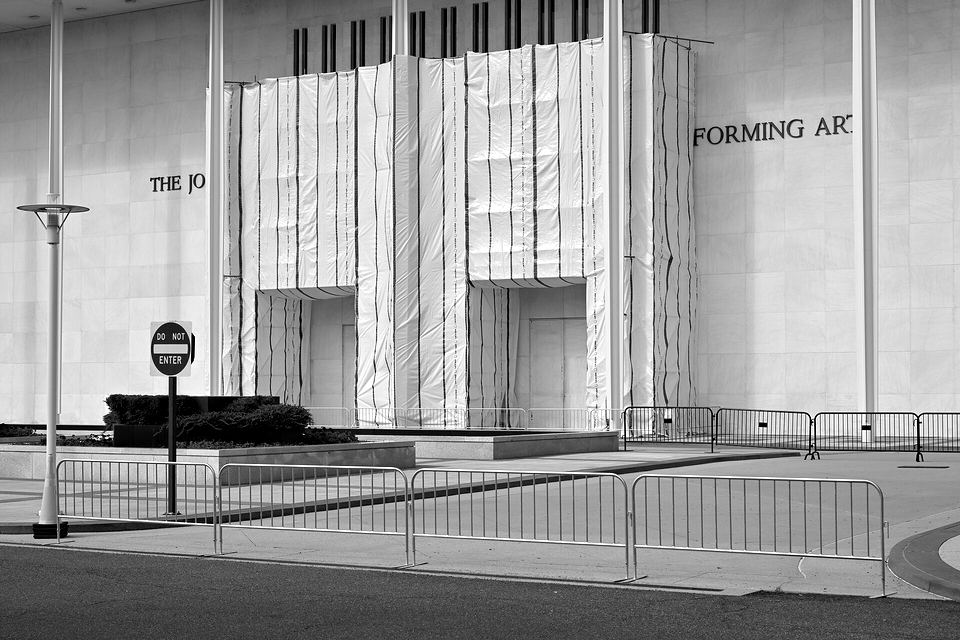

The John F. Kennedy Center for the Performing Arts has named Rick Canny, a talent manager who has worked with acts including ZZ Top and the drummer Tommy Lee, as its new artistic director, NPR reported Friday. The appointment comes while the Washington institution’s main building is closed to the public and its leadership is locked in a legal fight over the center’s name and future.
Matt Floca, the center’s executive director, announced the choice in an email to senior staff on Thursday that was obtained by NPR. The center confirmed the email’s contents. Floca wrote that Canny would advise leadership on artistic strategy, presenting and talent curation, ticketing and pricing, media opportunities and program sponsorships. Canny has consulted for the center since April 2025 through his firm, Favor the Artist, including as creative lead for the Kennedy Center Honors and the Mark Twain Prize, and he will keep that role.
The choice is unusual for a venue that has traditionally booked orchestras, dance and theater companies and leading solo artists. NPR reported that Canny’s published background shows little experience programming those kinds of performers, and that Floca, who was promoted from head of facilities in March, also has no background in arts administration. The center’s previous head of programming arrived and left within two weeks in January.
NPR also obtained an internal memo written in March by a senior music programmer that raised concerns about Canny’s fees, including $30,000 in consulting charges in a single month and more than $28,000 in another month that included first-class flights. In a statement to The New York Times, the center said the $30,000 figure did not reflect Canny’s current agreement and that his travel expenses had been reviewed. Canny did not respond to NPR’s requests for comment.
The center’s main building has been closed since September. Its board, now led by President Trump, voted to close it after a federal judge blocked the board from restoring Trump’s name to the facility, the Associated Press reported. Trump has said the closure is needed for safety repairs. A federal judge has twice ruled that the building cannot be renamed without the approval of Congress, which made the center a living memorial to President Kennedy in 1964 and has allocated $257 million for repairs. The closure itself is being contested in court.
The center says it will keep a small amount of public and educational programming. Its signature event, the Kennedy Center Honors, will move this year to Capital One Arena in downtown Washington on Dec. 7, according to the AP.
Supporters of the current leadership argue that the building genuinely needs extensive repairs and that a manager with deep industry ties can help an institution in transition handle ticketing, pricing and sponsorships. Arts administrators told NPR, however, that major venues typically book performances years in advance, which makes leadership turmoil especially costly for future seasons.
Sources
- NPR, Oct. 10, 2026: Canny named artistic director, Floca’s email and its description of the role, Favor the Artist consulting since April 2025, Floca’s background, previous programming head’s brief tenure, March memo on fees, center’s statement to The New York Times, center mostly closed and closure contested in court, booking done years in advance
- Associated Press (via PBS NewsHour), Oct. 2, 2026: board vote in September to close the building after a judge blocked restoring Trump’s name, Trump’s safety-repair rationale, two rulings that renaming requires Congress, 1964 living-memorial law, $257 million for repairs, Honors moved to Capital One Arena on Dec. 7
This article was drafted with automated tools from the sources listed, checked by a review pass, and published by Daniel Varrone. Corrections: editor@monochromechronicles.com