Health · Measles
As Measles Cases Climb, Many Adults Ask Whether They Need Another MMR Shot
Most people vaccinated as children are well protected, but some adults, including many immunized in the 1960s, may need another dose, health officials say.
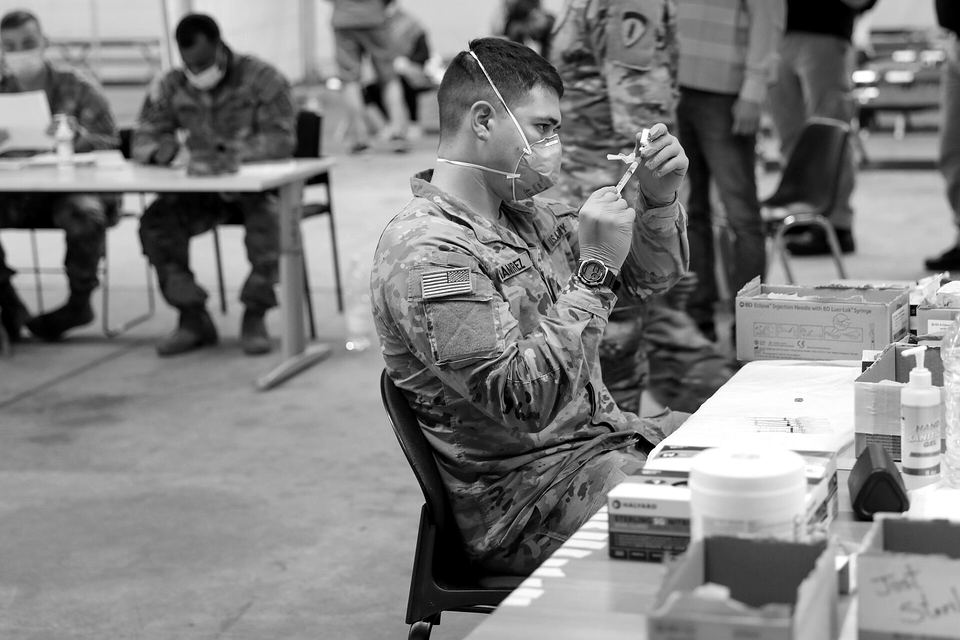

With more than 4,000 measles cases reported in the United States this year, the most in roughly three and a half decades, doctors say they are hearing the same question from adults again and again: Am I protected?
The Centers for Disease Control and Prevention counted 4,080 confirmed cases as of Oct. 8, already far above last year’s total of 2,289, CBS News reported. Pennsylvania alone has passed 1,000 cases and has reported five measles-associated deaths, and New York declared a state disaster emergency last week to expand who can give vaccines. About 95% of patients nationwide were unvaccinated or had an unknown vaccination status, according to the CDC.
“It’s a very common question for people to ask, ‘Am I immune? Am I OK? What do I need to do?’ And that is exactly the right question everyone should be asking themselves right now,” Patsy Stinchfield, executive director of the Measles Collaborative, a public health effort led by the National Foundation for Infectious Diseases, told NPR.
For most people, the answer is reassuring. Two doses of the measles, mumps and rubella vaccine are about 97% effective against measles, and one dose is about 93% effective, according to the CDC. Children in the United States have been advised to get two doses since 1989, when health officials concluded that a single dose was not enough to stop outbreaks, NPR reported.
Some adults should take a closer look. People born before 1957 are generally presumed immune, because measles was so widespread then that nearly everyone caught it as a child. But people vaccinated before 1968 with an early inactivated, or killed, vaccine, or with a vaccine of unknown type, should get at least one dose of the current live vaccine, according to the CDC. The inactivated version used from 1963 to 1967 was not effective.
The CDC recommends two doses, at least 28 days apart, for certain adults at higher risk, including college students, health care workers, international travelers and close contacts of people with weakened immune systems, as well as people at increased risk during an outbreak. Dr. Larry Kociolek, a pediatric infectious disease specialist at Lurie Children’s Hospital of Chicago, told NPR that for adults living in areas with high measles activity, “it does make a whole lot of sense” to get that second dose.
Adults who are unsure of their history can look for vaccination records first. Blood tests that check antibody levels exist but are not perfect, Dr. William Moss of the Johns Hopkins Bloomberg School of Public Health told NPR. The CDC notes that an extra dose of MMR is safe even for someone who may already be immune.
Getting vaccinated also protects people who cannot get the shot themselves, including pregnant people, infants under 6 months and those with severely weakened immune systems, Stinchfield said. While measles is often thought of as a childhood disease, NPR reported that a large share of this year’s patients have been unvaccinated adults, who face a higher risk of serious complications.
Sources
- NPR, Oct. 12, 2026: more than 4,000 cases this year, the highest in 35 years, Pennsylvania deaths and New York emergency, Stinchfield quotes, two-dose childhood recommendation since 1989, born before 1957 presumed immune, vaccinated before 1968 with inactivated vaccine, Kociolek and Moss comments, many patients are unvaccinated adults
- CBS News, Oct. 9, 2026: CDC count of 4,080 cases as of Oct. 8, 2025 total of 2,289, Pennsylvania past 1,000 cases with five deaths, Hochul’s disaster emergency, 95% unvaccinated or unknown status
- Centers for Disease Control and Prevention, accessed Oct. 2026: MMR effectiveness of about 93% for one dose and 97% for two, adults who should get two doses, born before 1957, inactivated vaccine used 1963 to 1967, extra dose is safe
This article was drafted with automated tools from the sources listed, checked by a review pass, and published by Daniel Varrone. Corrections: editor@monochromechronicles.com