Science · Biology
How Octopus DNA Folds May Help Explain Their Complex Brains, Study Suggests
Researchers in Vienna found that an ancient reshuffling of the cephalopod genome brought distant stretches of DNA into contact, creating new ways for genes to be switched on and off.
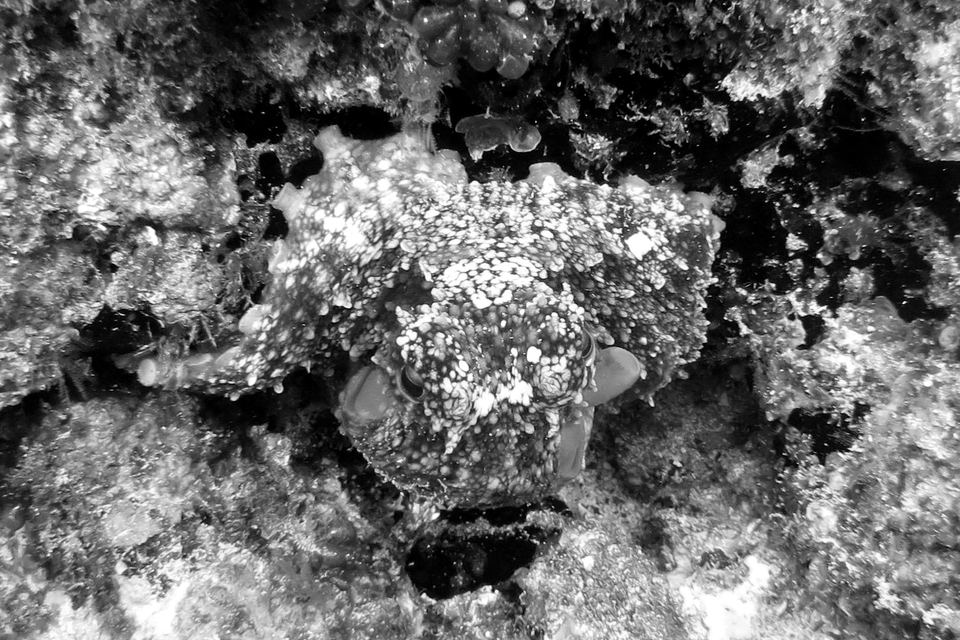

Octopuses, squid and cuttlefish are known for their complex nervous systems. A new study from the University of Vienna suggests that part of the explanation may lie not only in which genes these animals carry but in how their DNA is folded inside the cell.
The research, led by Thea Rogers of the university’s Department of Neuroscience and Developmental Biology, was published in the journal Nature Communications. The university announced the findings on Oct. 9, and ScienceDaily carried its account on Monday. The team focused on coleoid cephalopods, the group that includes octopuses, squid and cuttlefish.
“The genome isn’t just a sequence of genes. It’s folded into a complex three-dimensional structure,” Rogers said in the university’s announcement. That folding matters because stretches of DNA that sit far apart along a chromosome can end up next to each other in three-dimensional space, where they can influence each other’s activity.
The researchers reconstructed the three-dimensional structure of cephalopod genomes and compared it with patterns of gene activity. They found evidence that a large burst of genome reorganization, hundreds of millions of years ago, reshuffled these animals’ chromosomes and brought previously separated regions into close contact. Over time, the authors propose, the new contacts became woven into interconnected networks that control when and where genes are switched on, a phenomenon they call “regulatory entanglement.”
The structure turned out to have two layers. Large-scale domains of folded DNA stayed largely stable over long stretches of evolutionary time. Smaller loops were far more changeable, varying from species to species, from tissue to tissue and across stages of development. Many of those flexible loops sat near genes involved in the development and function of the nervous system, according to the researchers.
That pattern led the team to argue that the three-dimensional organization of the genome may actively shape evolution, rather than simply being a byproduct of it. In cephalopods, they suggest, the reorganized genome may have provided new raw material for the regulatory changes behind traits such as their sophisticated brains. Co-authors on the paper include Oleg Simakov and Caroline B. Albertin.
The authors present this as a possible mechanism, not a proven cause. The study shows an association between flexible DNA loops and nervous system genes, but it does not demonstrate that those loops produced cephalopod intelligence, and the university’s announcement frames the link as something that “may” have played a key role. Further research will be needed to test the idea.
Still, Rogers said, “Understanding how that structure evolves is becoming increasingly important.”
Sources
- University of Vienna, Oct. 9, 2026: Thea Rogers and the Nature Communications paper on coleoid cephalopods, 3D genome reconstruction and gene activity, ancient genome reorganization, ‘regulatory entanglement,’ stable large domains and dynamic smaller loops near nervous-system genes, argument that 3D organization shapes evolution, Rogers quote, hedged ‘may’ framing
- ScienceDaily, Oct. 12, 2026: University of Vienna account of the study, co-authors Oleg Simakov and Caroline B. Albertin, loops varying across species, tissues and developmental stages, study does not establish that the DNA changes caused cephalopod intelligence
This article was drafted with automated tools from the sources listed, checked by a review pass, and published by Daniel Varrone. Corrections: editor@monochromechronicles.com