Science · Space
Artemis II Reports Show What Trained Eyes Can Add at the Moon
NASA’s first detailed look at the science from April’s crewed lunar flyby credits the astronauts’ own descriptions, while a separate review found Orion’s heat shield held up far better than on the uncrewed test flight.
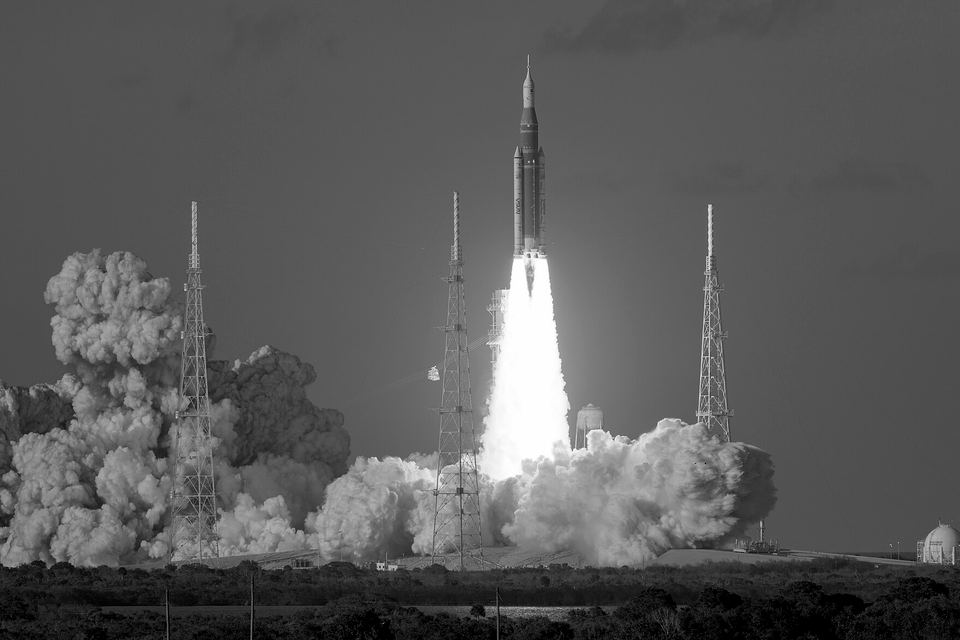

Six months after four astronauts flew around the moon, NASA has published its first detailed accounting of what the Artemis II crew learned, and much of the value, scientists say, came from the crew’s eyes and words rather than from cameras.
Reid Wiseman, Victor Glover, Christina Koch and Jeremy Hansen launched in April on a 10-day mission that brought humans near the moon for the first time in more than 50 years. They flew past the moon on April 6, coming within about 4,067 miles of its surface, and splashed down off San Diego on April 10. NASA released three preliminary science reports and a large data archive on October 7, meeting a six-month deadline it had set, Science News reported this week.
The crew worked in pairs during the roughly seven hours they spent close to the moon, with two observing while two described what they saw to mission control. Koch sketched the Orientale basin, a huge impact feature. Scientists said the astronauts’ descriptions of subtle colors, combined with data from the 1970s, help link those tints to the makeup of the surface: bluish tones point to titanium-rich volcanic rock, browns to iron and greens to glass formed by volcanoes or impacts.
During a 54-minute solar eclipse, the crew watched the sun’s corona and saw five tiny flashes as small rocks struck the lunar surface. Researchers estimated those meteoroids at about 8.5 grams and 4.5 centimeters across, possibly the smallest ever observed hitting the moon. Jennifer Heldmann, a planetary scientist at NASA’s Ames Research Center, used the observations to estimate that the chance of a dangerous strike during a two-week landing mission is less than one in 10 million.
The reports also list lessons. Cameras were not calibrated before launch, and windows charred during reentry, making it hard to tell how the glass affected images. Future crews will need more training in describing what they see, because astronauts in spacesuits on the surface cannot take notes.
A separate NASA engineering review, published this week, concluded that Orion’s heat shield performed as expected as the capsule returned at about 39 times the speed of sound. Engineers counted nine spots where charred material broke away, compared with 103 after the uncrewed Artemis I flight, a roughly tenfold improvement after NASA changed the reentry path.
Critics of human spaceflight have long argued that robotic probes return more science for the money, and no single flyby settles that debate. NASA’s reports are its case that people trained in geology notice and explain things instruments can miss.
Next year, Artemis III is planned as a crewed test in Earth orbit, where Orion will practice meeting lander hardware from SpaceX and Blue Origin. Landings are scheduled to begin with Artemis IV in 2028.
Sources
- Science News, Oct. 16, 2026: Artemis II crew names, April 6 flyby and April 10 splashdown, Oct. 7 data release and three reports, paired observing, Koch’s sketch, color findings, 54-minute eclipse, five impact flashes and meteoroid size, Heldmann risk estimate, camera and window lessons, Artemis IV in 2028
- NASA (republished by Phys.org), Oct. 15, 2026: heat shield performed as expected, about 39 times the speed of sound, nine char-loss spots versus 103 on Artemis I, changed entry path, splashdown off San Diego, Artemis III in low Earth orbit with Blue Origin and SpaceX lander test articles, landings beginning with Artemis IV in 2028
- NASA, Oct. 7, 2026: release of Artemis II lunar science data and images
- NASA Science, Artemis II preliminary lunar science report, Oct. 2026: flyby on April 6, 2026, within 4,067 miles of the lunar surface
This article was drafted with automated tools from the sources listed, checked by a review pass, and published by Daniel Varrone. Corrections: editor@monochromechronicles.com