Opinion · Editorial
Vote Early, and Make Washington Prove Its Case Before Any Ballot Is Set Aside
Saturday’s rallies urged Americans to cast ballots before November 3. The Justice Department’s last-minute bid to freeze 20,000 California mail ballots shows why that advice matters.
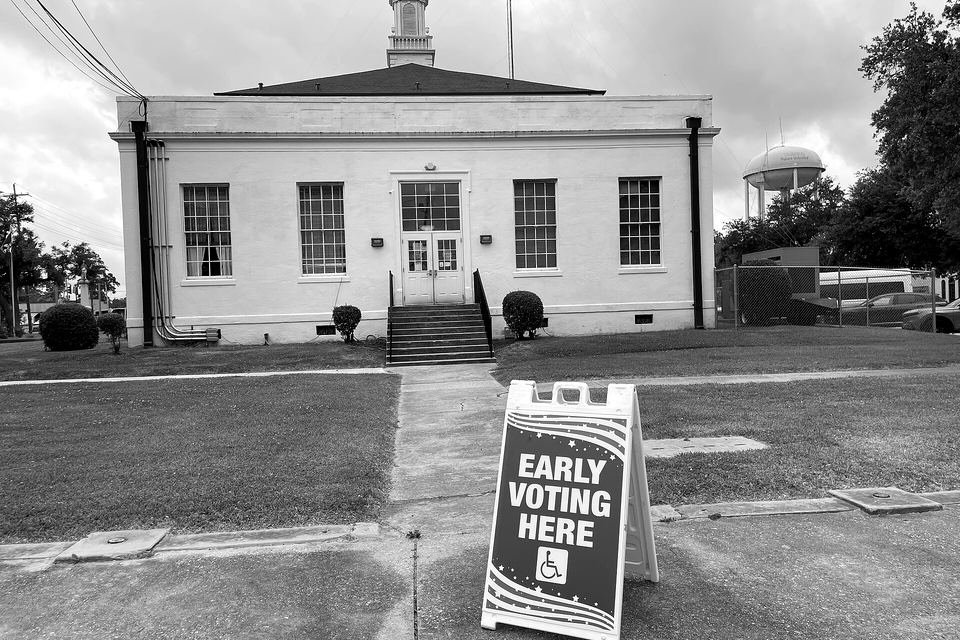

On Saturday, people in New York, Washington, Atlanta, Dallas and thousands of smaller places spent the afternoon doing something more useful than chanting. Under the No Kings banner, organizers walked people to ballot drop boxes, helped them check their registrations and urged them to make a plan to vote early. With the midterms barely two weeks away, that is exactly the right instinct, and it should not belong to one side.
The reason it feels urgent is the Justice Department’s lawsuit against California. On a Tuesday three weeks before Election Day, federal officials handed Los Angeles County a thumb drive listing about 20,000 registered voters they called likely noncitizens, with the password reportedly on a sticky note, and gave the county 48 hours to act. When the county declined to open the drive on security grounds and the state refused to purge voters on that basis, the department sued, asking a court to keep those voters’ mail ballots from being counted until their citizenship is confirmed.
Consider what that request means in practice. Mail ballots are already in voters’ hands. The department has not publicly explained how it built its list, and matching incomplete voter files against imperfect immigration records is known to produce false positives. California’s secretary of state, Shirley Weber, has called the claims unsupported and likely inaccurate. If even a modest share of the people on the list are citizens, the remedy the government seeks would silence lawful voters to catch, at most, a handful of unlawful ones.
The government’s strongest argument deserves a fair hearing: every ballot cast by an ineligible person cancels out one cast by a citizen, and no one should shrug at that. We agree with the goal. Keeping noncitizens off the rolls is the law, and states should take credible evidence seriously. But credible evidence is the point. It means names checked against reliable records, shared securely, with time for election officials to verify them and for voters to respond. It does not mean an ultimatum delivered weeks before an election, built on a method no one outside the department has been allowed to examine.
The record so far does not inspire confidence. NPR reported that the department has lost every decided case in which it sought nonpublic voter roll data, and state election officials say noncitizen voting is rare. The Constitution gives states the primary job of running elections for good reason: it puts the work close to voters and keeps it out of the hands of whoever happens to hold federal power in a given year.
This is also about something larger than one state. Roughly three in 10 ballots in 2024 were cast by mail, according to federal figures cited by Al Jazeera, and far more in Western states. If a federal agency can freeze ballots on the strength of an unexplained list in California, nothing stops a future administration of either party from doing the same in Texas or Florida. Rules that protect voters only work if they protect everyone’s.
So the advice from Saturday’s rallies stands, whoever you support. Check your registration. Vote early if you can, and if you vote by mail, follow your ballot’s tracking and fix any problem while there is still time. The best answer to an effort to cast doubt on lawful ballots is a large, early, well-documented vote, counted in full.
Sources
- Associated Press and Getty Images photo coverage (via Outlook India and Sinclair stations), Oct. 17-18, 2026: No Kings rallies in New York, Washington, Atlanta and Dallas, early-voting focus
- UnoTV, Oct. 18, 2026 (later source): No Kings: Vote Early day focused on early and mail voting, more than 3,000 events
- NPR (via KJZZ), Oct. 16, 2026: thumb drive with password on a Post-it, 48-hour deadline, about 20,000 names, false positives in data matching, unexplained methodology, Weber’s description of the claims as unsupported and likely inaccurate, department’s 0-for-26 record in voter roll data cases, constitutional role of states
- Al Jazeera, Oct. 15, 2026: suit to stop counting of mail ballots, county’s refusal to open the drive, Weber’s response, noncitizen voting described as rare, about 30 percent of 2024 ballots cast by mail
- Getty Images caption (via Fox 11 Green Bay gallery), Oct. 17, 2026: Brooklyn rally; thousands of local events across the United States including marches to polling sites or drop boxes, voter-registration checks and absentee-ballot requests
This editorial was drafted with automated tools from the sources listed, checked by a review pass, and published by Daniel Varrone. Corrections: editor@monochromechronicles.com