Nation · Russia Sanctions
Rubio Calls Russia Sanctions Waiver a 60-Day Pause as Both Parties Object
The secretary of state said the president wants time to study the economic effects of a law he signed last month, while Trump said he had not made a final decision.
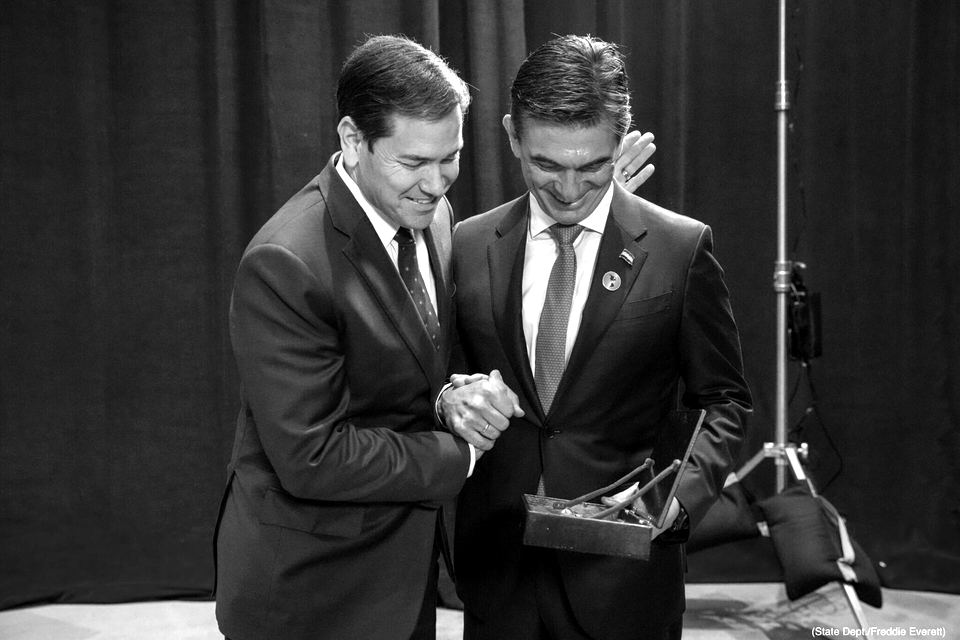

Secretary of State Marco Rubio said Saturday that President Trump’s decision to waive new sanctions and tariffs on Russia amounts to a pause of up to 60 days, during which the administration will study what the penalties would do to the American and global economies, according to Reuters and Agence France-Presse.
Rubio spoke to reporters before leaving for a diplomatic trip to Uzbekistan. The president, he said, wants to use the 60-day period to analyze the effects of the measures, noting that they reach well beyond Russia to the countries that buy its oil and gas. He pointed to India, which still depends heavily on Russian crude, Reuters reported.
The executive order Trump signed on Friday set aside most of the penalties in a sanctions law named for the late Senator Lindsey Graham, two days before they were to take effect. The law, which Trump signed in September, calls for tariffs on countries that import Russian energy and for duties on Russian goods. The order itself did not say how long the waiver would last.
Trump, speaking Saturday at his Mar-a-Lago club in Florida, suggested the question remained open. A lot of people did not yet know what his decision was, he told reporters, according to Reuters, and AFP reported that he called the move a very good decision for the United States and the world.
Rubio framed the decision around energy prices. The war with Iran, attacks by Yemen’s Houthi rebels on Saudi Arabia and the war in Ukraine are all affecting oil markets, and he said those conflicts were starting to collide with one another. He also defended a separate arrangement under which Russia will send more diesel to world markets, arguing that the fuel would be sold one way or another and the only question was how much would reach the United States. Reuters reported that Trump said Russia would initially supply more than 300,000 metric tons of diesel to the United States.
That is the administration’s strongest case: diesel prices have climbed sharply since the Iran war began, and tariffs on major economies such as India and China could push costs higher still for American households weeks before the midterm elections.
The waiver has nonetheless drawn criticism from members of both parties. AFP reported that Republican Senator Thom Tillis called it beyond irresponsible and that Senator Ted Cruz of Texas, also a Republican, called it a mistake. Reuters reported that a Republican senator from South Carolina said she disagreed with the decision because she does not trust Vladimir Putin or Russia, and planned to raise it with the president.
Ukraine’s president, Volodymyr Zelensky, warned that the order rewards Putin and would embolden him to prolong the war, according to both news agencies. Russia welcomed the waiver: Kirill Dmitriev, an envoy for Putin, called it “an important and truly historic moment” in a social media post, AFP reported.
Whether the pause ends with the penalties restored, narrowed or dropped is now up to the White House. The 60-day window Rubio described would run past the November 3 elections.
Sources
- Reuters (via ARY News), Oct. 18, 2026: Rubio’s 60-day remarks before leaving for Uzbekistan, India’s reliance on Russian oil, executive order waiving Graham Act measures signed last month, order did not specify duration, Trump’s Mar-a-Lago comments, diesel deal and 300,000 metric tons, ‘crash into each other’ remark, Zelensky’s criticism, South Carolina senator’s objection, midterm timing
- Agence France-Presse (via France 24), Oct. 18, 2026: Rubio’s 60-day ‘analyse’ remarks, conflicts including the Iran war and Houthi attacks on Saudi Arabia, diesel to be sold ‘one way or the other’, Trump calling it a very good decision, law passed in September, waiver two days before effect, Tillis and Cruz criticism, bipartisan objections, Zelensky’s view that it rewards Putin, Russian welcome
- CBS News, Oct. 17, 2026: tariffs had been due to take effect Sunday, law named for the late Senator Graham
- Agence France-Presse (via ARY News), Oct. 17, 2026: Putin envoy Kirill Dmitriev calls the suspension of the Graham Act ‘an important and truly historic moment’
This article was drafted with automated tools from the sources listed, checked by a review pass, and published by Daniel Varrone. Corrections: editor@monochromechronicles.com