World · Canada
Alberta Voters Reject a Path Toward Leaving Canada by a Wide Margin
About three in four voters chose to stay in Canada in the province’s first independence referendum, but separatist leaders say their movement is not going away.
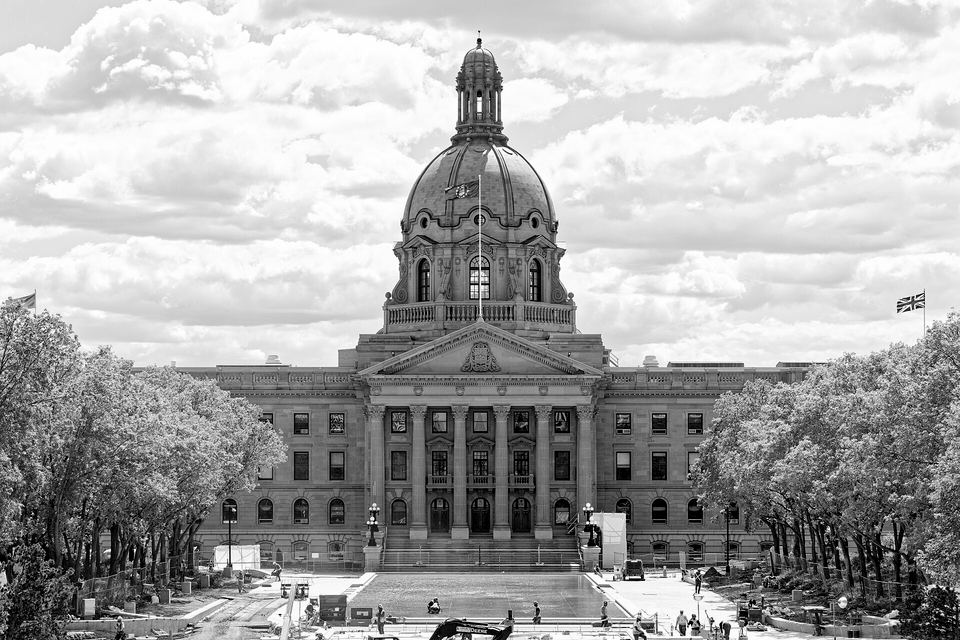

Voters in Alberta on Monday turned down a proposal that could have set the oil-rich Canadian province on a path toward independence. With about 1.8 million votes counted, roughly 76 percent backed remaining in Canada and about 24 percent supported starting a process that could lead to a future separation vote, according to preliminary results reported by Al Jazeera, drawing on the Associated Press and Reuters.
The vote was nonbinding, and even a yes result would not have ended Canadian sovereignty over the province. It would instead have opened complicated negotiations involving the federal government, the other provinces and Indigenous peoples. The independence question was the first of 10 on the ballot. The other nine dealt with immigration, access to provincial services such as education, social care and health care, and voter identification, and preliminary results showed voters approving eight of them.
Premier Danielle Smith, a conservative, called the referendum in May after a petition signed by about 300,000 Albertans. She opposed separation but said the petitioners deserved a vote, and she has said she will not hold another one while in office. After the results, she said Albertans had chosen a stronger Alberta in a united Canada. Prime Minister Mark Carney, who grew up in Alberta and campaigned for remaining, called the outcome a clear choice for unity.
Separatist leaders said they would keep going. Jeffrey Rath of the Alberta Prosperity Project said the push for independence would continue and that the movement had learned from the campaign. Cory Morgan of the group Pathway to Independence said a defeat would force the movement to regroup but not to quit.
The independence case rests on economic grievances that many Albertans share even if they do not want to leave. Separatists argue that the province of about 5.1 million people sends more money to Ottawa than it gets back, and that federal limits on energy development have hurt an economy built on some of the world’s largest oil reserves. Smith has blamed former Prime Minister Justin Trudeau’s climate policies for feeding that anger. Carney has worked to improve relations, including a partnership with Smith on a pipeline to export more oil sands crude overseas.
The campaign also drew attention from the United States, where Treasury Secretary Scott Bessent called Alberta a natural partner and Elon Musk wrote that the province should separate. Carney warned that separation was a risky bluff, and researchers pointed to possible online influence campaigns from Russia and the United States, Al Jazeera reported.
The vote may not settle the question. An Angus Reid poll released days before found that 62 percent of Albertans think the separatist movement will never end, while 69 percent opposed holding another referendum if this one failed. Global News reported that the result has also exposed strains inside Smith’s United Conservative Party, where she has told members that anyone speaking for the party must accept its pro-Canada position.
Sources
- Al Jazeera (with AP and Reuters), Oct. 20, 2026 (later source): preliminary results of about 76 percent to 24 percent with about 1.8 million votes counted; Carney’s statement; Rath’s reaction; Bessent and Musk comments; oil reserves and pipeline background
- Al Jazeera, Oct. 20, 2026 (later source): the nonbinding vote and its 10 questions; the 300,000-signature petition; Smith’s statement; Morgan’s reaction; Angus Reid poll figures; possible online influence campaigns
- Global News, Oct. 21, 2026 (later source): Smith says the United Conservative Party remains federalist and asks all who speak for the party in a formal position to accept the result; organized separatists inside the party, including Jeffrey Rath, challenge her leadership
- ATB Financial, Sept. 23, 2026: Alberta’s population stands at 5,101,050 people, per Statistics Canada estimates
This article was drafted with automated tools from the sources listed, checked by a review pass, and published by Daniel Varrone. Corrections: editor@monochromechronicles.com