Science · Space
Europe’s Euclid Telescope, Built to Map Dark Matter, Finds Its First Comet
A doctoral student’s software spotted a faint, fuzzy streak in survey images. The comet, now named C/2026 S1 (Euclid), is a lucky catch for an observatory designed to look far beyond the solar system.
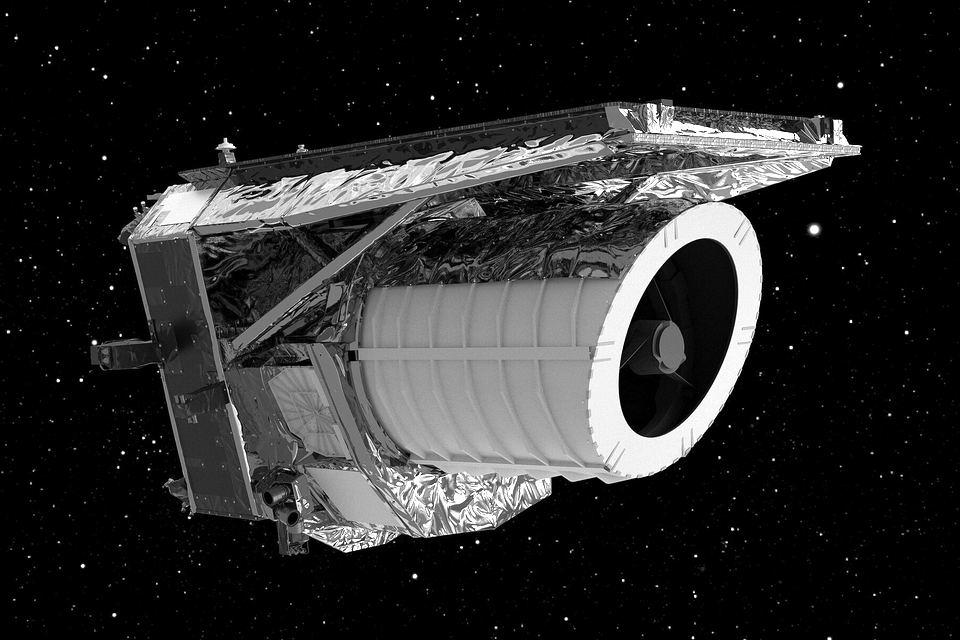

The European Space Agency’s Euclid space telescope, which was built to study the most distant reaches of the universe, has discovered a previously unknown comet much closer to home, the agency announced on Monday.
The comet, officially designated C/2026 S1 (Euclid), appeared in images the telescope took between Sept. 16 and Sept. 24 while surveying a region of sky known as the Euclid Deep Field North. The International Astronomical Union’s Minor Planet Center confirmed the discovery on Oct. 8, according to ESA and Popular Science.
The find came from Mikko Pöntinen, a doctoral student at the University of Helsinki who works with the Euclid Consortium’s group studying solar system objects. He wrote software that searches the telescope’s images for moving objects. The program flagged a streak that appeared across several exposures, and Pöntinen identified it as a fast-moving body. By predicting its path, he found it again in five sets of images. A faint, fuzzy cloud around the object suggested it was active, shedding dust and gas the way comets do as they are warmed.
The comet is about 1.3 billion kilometers, or roughly 800 million miles, from Earth, placing it between the orbits of Jupiter and Saturn. Its path is tilted well above the plane in which the planets travel, and it follows a long orbit that takes thousands of years to complete. Astronomers expect to refine that estimate as more observations come in. BBC Sky at Night Magazine reported that the comet is much too dim to be seen through amateur telescopes.
The discovery was unexpected because Euclid is poorly suited to comet hunting. The telescope, which launched in 2023 on a planned six-year mission, is designed to map billions of galaxies to help scientists understand dark matter and dark energy. It deliberately avoids the dusty band of sky along the plane of the planets, where most comets and asteroids are found, and it usually photographs each patch of sky only once.
Bruno Altieri, a Euclid archive scientist, said very few comets were ever expected to turn up in Euclid’s data and described this one as a fortunate coincidence between the comet’s orbit and the telescope’s scanning pattern. Valeria Pettorino, the mission’s project scientist, said the team was pleased to hand a newly found comet to the wider astronomy community for follow-up observations, Sci.News reported.
The comet is not a suitable target for ESA’s planned Comet Interceptor mission, which aims to visit a pristine comet entering the inner solar system for the first time. But Altieri said the alert process served as a useful rehearsal for how the two teams might coordinate when Euclid or another survey turns up a more promising candidate.
The episode shows how large sky surveys can yield discoveries their designers never planned for, provided someone writes the tools to look.
Sources
- European Space Agency, Oct. 19, 2026: Euclid discovers new comet C/2026 S1 (Euclid); images from Sept. 16 to 24; Minor Planet Center confirmation; distance; Comet Interceptor context
- Sci.News, Oct. 19, 2026: Pöntinen’s software and detection; fuzzy coma; 1.3 billion km distance; tilted orbit of thousands of years; Altieri and Pettorino comments
- Popular Science, Oct. 20, 2026 (later source): confirmation by the Minor Planet Center on Oct. 8; five fields of view in the Euclid Deep Field North; Euclid’s dark matter and dark energy mission launched in 2023 for six years
- BBC Sky at Night Magazine, Oct. 21, 2026 (later source): comet C/2026 S1 (Euclid) in Draco, much too dim to be seen through amateur telescopes
- European Space Agency, Euclid overview page, accessed Oct. 28, 2026 (later source): Euclid launched in July 2023
This article was drafted with automated tools from the sources listed, checked by a review pass, and published by Daniel Varrone. Corrections: editor@monochromechronicles.com