Culture · Film
New Film Puts Disability Rights Pioneer Judy Heumann on Screen
“Being Heumann,” starring Ruth Madeley as the activist who helped force the 1977 sit-in behind the first federal disability-rights rules, opened in theaters Nov. 6 and began streaming on Apple TV Nov. 13.
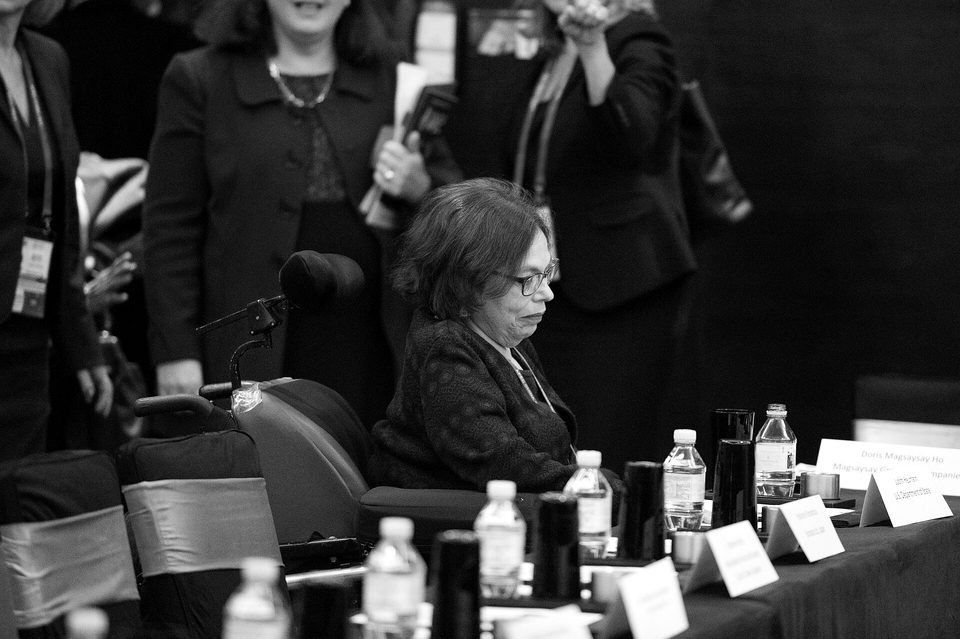

“Being Heumann,” a drama about disability-rights activist Judy Heumann, opened in limited release in U.S. theaters on Nov. 6 and started streaming on Apple TV on Nov. 13, after premiering as the opening-night film of the Toronto International Film Festival in September.
The film is directed by Siân Heder, who won an Academy Award for writing and directing “CODA,” and is based on Heumann’s memoir. Ruth Madeley plays Heumann; Mark Ruffalo, Dylan O’Brien and Rob Delaney also star. Heder co-wrote the screenplay with Rebekah Taussig.
The film centers on the 1977 sit-in at the federal Department of Health, Education and Welfare’s San Francisco office, where Heumann and other disabled activists occupied the building for nearly a month to demand the government enforce Section 504 of the Rehabilitation Act of 1973, the first federal law barring disability discrimination in programs that receive federal money. The protest is widely described as the longest peaceful takeover of a U.S. government building on record, and it led the Carter administration to sign the regulations. Heumann, who had polio as a child and used a wheelchair, went on to help shape the Americans with Disabilities Act of 1990 and later served as a disability-rights adviser in the Clinton and Obama administrations’ State Department. She died in 2023 at age 75.
Heder has said she drew on “Crip Camp,” the 2020 documentary that also featured Heumann and other activists from the same movement, as part of her research for the dramatized film. Madeley, who like Heumann is a wheelchair user, is joined on screen by a supporting cast that includes several other disabled actors in roles as fellow sit-in participants, a casting choice several reviewers singled out as unusual for a studio biopic of this scale.
Reviews have been mixed to positive. The Boston Globe’s review credited Madeley’s performance and the film’s disabled supporting cast while saying the script leans on familiar biopic beats; other critics have made similar points about its conventional three-act structure, even as most praised the film for bringing the 1977 sit-in to a wider audience decades after it happened.
The film arrives as Heumann’s influence on federal disability policy continues to be cited in current debates. The Section 504 regulations she helped force into existence became the model for parts of the Americans with Disabilities Act 13 years later, and disability-rights groups have pointed to both laws in recent fights over accessibility funding and enforcement at federal agencies. “Being Heumann” does not weigh in on those current debates; it ends with Heumann’s generation’s victory in 1977.
Sources
- NPR, Nov. 15, 2026: the film’s release and its ties to the disability-rights movement <https://www.npr.org/2026/11/15/nx-s1-6002935/being-heumann-new-generation-disability-rights>
- The Boston Globe, Nov. 12, 2026: cast, director, release dates and background on Heumann’s history <https://www.bostonglobe.com/2026/11/12/arts/being-heumann-review/>
This article was drafted with AI writing tools from the sources listed, checked by a review pass, supervised by the paper’s editors and published by Daniel Varrone. Corrections: editor@monochromechronicles.com
More from Culture
Recommended Reading
About this story: Compiled by the The Monochrome Chronicles desk from the sources listed above. Our standards · Report an error · Follow on YouTube