Science · Space
Voyager 1 Reaches One Light-Day From Earth, a First for a Spacecraft
NASA projected the 1977 probe would cross the mark early Wednesday, about 16 billion miles out, so a radio signal now needs a full day to reach it.
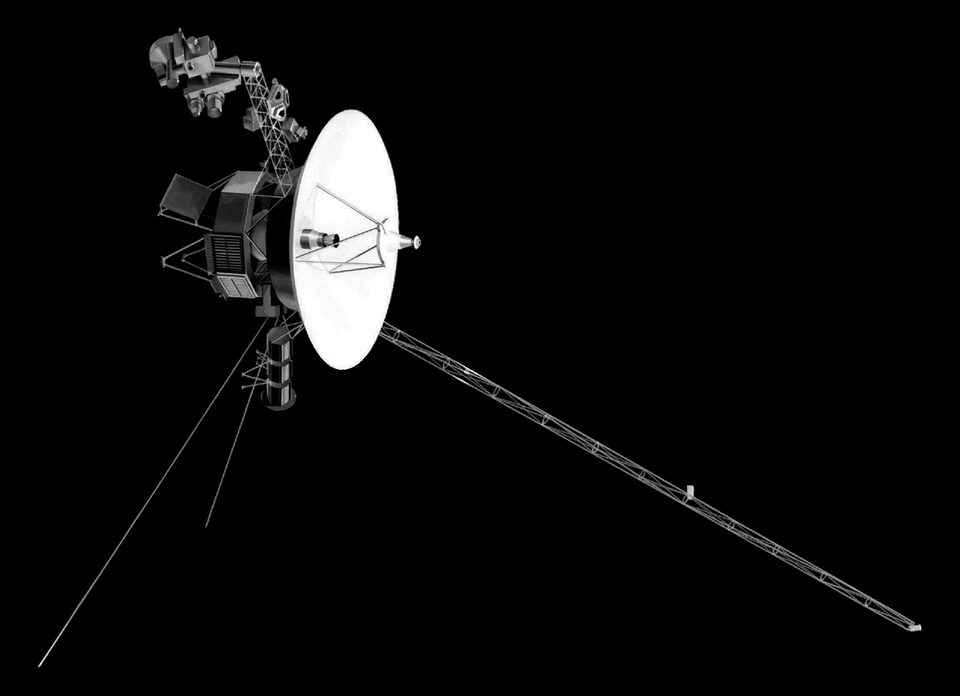

NASA projected that Voyager 1 would reach a distance of one light-day from Earth at 5:16:07 a.m. Eastern on Wednesday, Nov. 18, making it the first spacecraft to do so. The agency’s Voyager page puts the distance at about 16 billion miles, or roughly 26 billion kilometers, and says the probe will have traveled for 49 years, two months and 11 days since its Sept. 5, 1977 launch.
A light-day is the distance light travels in 24 hours, so a radio command sent from Earth now takes a full day to arrive. Science News reported that a reply takes another day to come back, meaning a question and answer span about two days. The magazine noted that the distance is more than four times that from the Sun to Pluto.
NASA says Voyager 2, which is farther behind, is on pace to reach one light-day from Earth in November 2035. Science News reported that the probes’ onboard power is expected to run out in 10 to 15 years, after which they can no longer send data. NASA’s page was updated Wednesday but still describes the milestone in the future tense; the crossing time here is the agency’s projection, not a confirmation.
Sources
- NASA Science, Nov. 18, 2026: Voyager 1 one-light-day date and time, distance, travel time, Voyager 2 timing <https://science.nasa.gov/mission/voyager/voyager-1/voyager-1-what-is-a-light-day/>
- Science News, Oct. 14, 2026: round-trip signal delay, comparison with Pluto’s distance, power outlook <https://www.sciencenews.org/article/voyager-1-light-day-exploration>
This article was drafted with AI writing tools from the sources listed, checked by a review pass, supervised by the paper’s editors and published by Daniel Varrone. Corrections: editor@monochromechronicles.com
More from Science
Recommended Reading
About this story: Compiled by the The Monochrome Chronicles desk from the sources listed above. Our standards · Report an error · Follow on YouTube